Through these he has given us his very great and precious promises, so that through them you may participate in the divine nature, having escaped the corruption in the world caused by evil desires.2 Peter 1:4
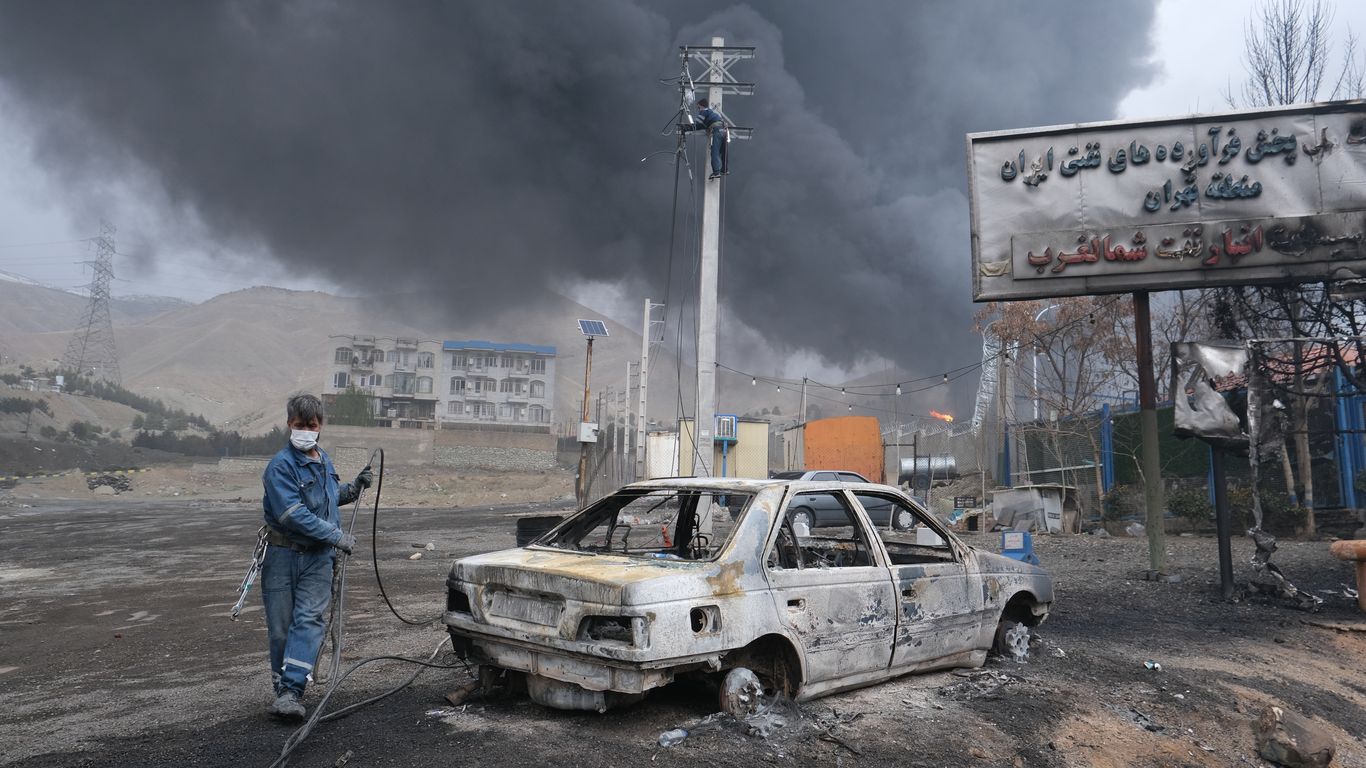
U.S. and Israeli military strikes on Iran are playing out in the air and at sea, while a parallel fight is unfolding online.
Why it matters: Iranian actors — both state-linked and loosely affiliated — have a history of cyberattacks against the U.S., but the U.S. and Israeli governments are now using similar tactics.
Driving the news: A Wednesday cyberattack allegedly linked to Iran‑aligned hackers disrupted operations at Stryker, a major U.S. medical technology company, The Wall Street Journal reported.
Stryker confirmed in a statement that it is "experiencing a global network disruption to our Microsoft environment," but that it hasn't seen any signs of "ransomware or malware" and now believes the incident is "contained."
Microsoft declined to comment.
The same group claimed on X that it hacked U.S.-based payments firm Verifone. The company said it found no evidence of a breach and no service disruption.
Here's what to know about the state of cyberwarfare tactics:
Israel says it's targeting cyber infrastructure
Catch up quick: Israel last week carried out a "wide-scale strike" targeting a collection of military sites in Tehran that allegedly housed the headquarters of the Iranian Islamic Revolutionary Guard Corps, the IDF said on X.
The IDF claims that the headquarters of the IRGC's "cyber and electronic headquarters" and its "Intelligence Directorate" were among the military outposts hit in the strike.
Yes, but: Iran has been under a near-total internet blackout since the first U.S. and Israeli strikes began, limiting the flow of information coming out of Iran, Politico noted last week.
Cyberattacks from Iran
By the numbers: Iran-aligned hackers and self-described "hacktivist" groups have increased activity against entities in the Middle East, the U.S. and parts of Asia following the Feb. 28 airstrikes, according to CrowdStrike.
Hydro Kitten, a group that operates on behalf of the Islamic Revolutionary Guard Corps, has indicated plans to target the financial sector, Adam Meyers, senior vice president of counter adversary operations at CrowdStrike, said in a statement earlier this month.
Researchers from cybersecurity company Palo Alto Networks' Unit 42 reported that dozens of pro-Iran hacktivist groups say they have launched several cyberattacks since Feb. 28, mostly targeting critical infrastructure.
Pro-Russian political hackers, called NoName057(16), teamed up with Iranian hacktivists on March 2 to target Israeli defense and municipal organizations, including defense contractor Elbit Systems, according to researchers at Flashpoint.
The same Russian hacktivists also claimed they broke into an Israeli water management system and other industrial control systems, but researchers could not verify the claim.
How it works: Iran "lacks symmetric conventional response options against the United States and Israel," which is why the regime "has historically relied on cyber operations and a dispersed array of proxy actors as its instruments of response," the Center for Strategic & International Studies notes.
Cyberattacks from U.S., Israel
Zoom in: Israel hacked a popular Iranian prayer app to send notifications to potentially millions of phones last month, urging the country's military personnel to defect from the regime, The Wall Street Journal reported.
Iranian state media had also reported that news sites, including state news agency IRNA, were hijacked to display articles about the cyberattacks and discredit the regime.
The Israeli military had access to "nearly all" of the traffic cameras in Tehran, the Financial Times reported.
In partnership with the CIA, Israel used the cameras to target the air strike that killed Ayatollah Ali Khamenei, Iran's supreme leader.
"Israel used, or very likely used, very cutting-edge kind of data processing or big data fusion techniques that from a kind of layman or citizen perspective you would call AI," Omer Benjakob, a cybersecurity reporter for the Israeli newspaper Haaretz, told NPR.
Zoom out: Israel is likely much further along than the U.S. is in developing its own AI systems for military use, Benjakob said.
The intrigue: Gen. Dan Caine, chair of the Joint Chiefs, said the U.S. Cyber Command and Space Command were among the "first movers" during the initial strike against Iran last month.
Flashback: In February 2024, the chief technology officer of U.S. Central Command, gave the first public confirmation that the U.S. military was using AI to support strikes.
Central Command's CTO told Bloomberg that the military had used AI to help narrow down targets for more than 85 strikes in Syria and Iraq that month, as well as to identify rocket launchers in Yemen and surface vessels in the Red Sea.
Citizen Lab, a digital rights group, said in October that evidence suggests Israel is "linked" to an "AI-enabled" disinformation campaign to instigate Iranian unrest.
Iran's previous cyber attacks
Last year, an Iranian national pleaded guilty to participating in a ransomware scheme that targeted several U.S. cities and organizations.
During the 2024 election cycle, Iranian actors hacked Trump's presidential campaign via spear-phishing.
In 2022, Iranian state-sponsored hackers used file-encrypting ransomware and wiper malware against the Albanian government, knocking websites and services offline.
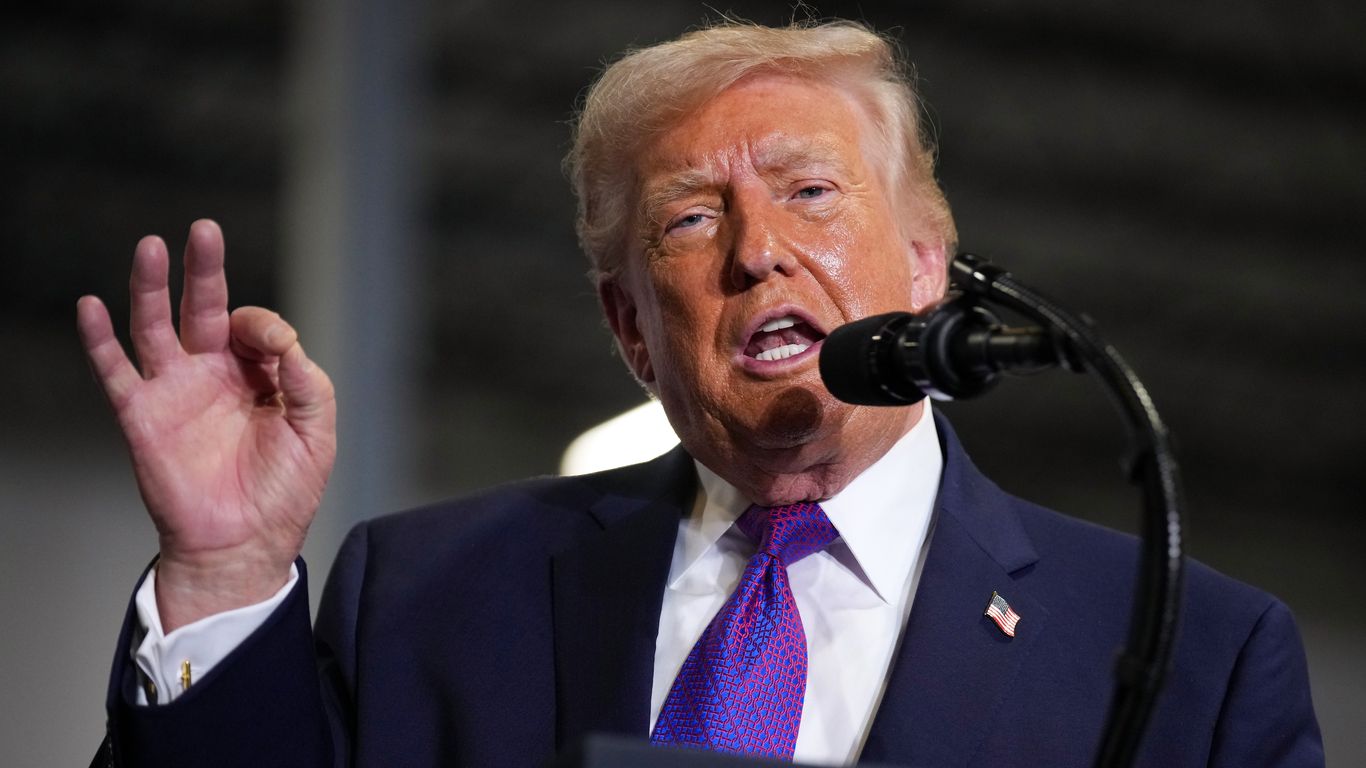
President Trump called GOP Rep. Thomas Massie "disloyal" and a "nut job" during a visit to Massie's district Wednesday that marks a striking escalation in his long-running feud with the Kentucky Republican.
Why it matters: Trump has gone after select GOP incumbents from afar for years. But now, the president is doing it on their own turf.
"He is the worst person. His name is...What the hell? How did he ever end up in Kentucky, his name is Thomas Massie," Trump said Wednesday afternoon, drawing boos from the audience at the mention of Massie's name.
Trump brought Massie's primary challenger, Ed Gallrein, up on stage to speak next to him, calling Gallrein "a real hero."
"You deserve an authentic, true Republican conservative that stands shoulder to shoulder with our president," said Gallerin, who Trump recruited and has endorsed.
Driving the news: Massie is the first Republican incumbent that Trump's political organization targeted for defeat this cycle — and the intensity of the president's anti-Massie efforts means the primary outcome will be scored as a test of Trump's influence.
"Give me somebody with a warm body to beat Massie, and I got somebody with a warm body, but a big, beautiful brain, and a great patriot. He's unbelievable," Trump said of Gallrein on Wednesday.
Trump noted that he won Kentucky handily and cast Massie as out of step with the state's voters.
At a national prayer breakfast last month, Trump called Massie a "moron," adding, "He's an automatic 'no,' no matter what."
Catch up quick: Massie's willingness to buck the party line has become so routine that House Speaker Mike Johnson (R-La.) doesn't even factor him into the equation for tough votes.
The Kentucky Republican was one of just two GOP lawmakers to oppose Trump's signature "big, beautiful bill."
He also led the push to release the Epstein files, defying Trump and party leadership.
Flashback: Trump has long actively supported challengers to incumbent Republicans whom he views as disloyal with campaign funds and social media posts.
But Wednesday's trip is a notable step further.
Between the lines: The speaker has neither endorsed Massie nor offered much public support, despite his self-described role as head of an "incumbent protection program."
"I have the back of every House Republican," Johnson told Axios in an interview at the Capitol last month, while adding that "It would be helpful if Thomas would play with the team more."
Asked about whether he planned to endorse Massie, Johnson replied, "If he continues to vote with the Democrats, it makes it very difficult for me."
The other side: Massie did not immediately respond to a request for comment on Trump's remarks.
But in an interview with ABC News on Wednesday, he said his constituents are raising questions about Trump's war on Iran and its impact on the U.S. economy.
Last week, Massie was one of just two House Republicans to support Democrats' War Powers Resolution.
Editor's note: This story has been updated with additional reporting.
Data: Gallup World Affairs poll; Chart: Axios Visuals
Americans' positive views of Canada and Great Britain, historically two of Washington's closest friends,hit their lowest level since the 1980s in new Gallup polling.
By the numbers: In the previous 12 months through February, Americans' positive ratings for Britain dropped by eight points and for Canada by nine.
Americans' view of both is still overwhelmingly positive with the largest declines coming from Republicans.
Canada's favorability among Republicans plummeted from 85% to 62%. Republicans' favorable rating for Great Britain fell to 64%, which is 18 points lower than the previous record low.
Independents' views of Britain also hit a new low of 72% from 77% last year. Their warm feelings for Canada fell to 80% from 89% the prior year.
Yes, but: Canada remains popular with Democrats, 95% of whom view America's northern neighbor positively. Since 2011, at least nine in ten Democrats have viewed Canada favorably.
Democrat's 89% favorability for Britain is down slightly from 93% but largely consistent with the last decade of data.
Worth noting: Americans rated Japan and Italy the highest, while Canada tied with Denmark for third.
Friction point: Gallup notes a number of factors strained Washington's diplomatic ties with Canada and Britain, including differences over major globalconflicts.
Amid a tariff-driven rift with the U.S., Canada took steps to improve trade with China.
After their tension at the World Economic Forum, Trump revoked Prime Minister Mark Carney's invite to join his "Board of Peace."
The latest: Trump recently told The Telegraph that he was "very disappointed" in Prime Minister Keir Starmer, who reportedly blocked the U.S. from using UK bases to strike Iran before deciding to authorize them specific uses.
The president took to Truth Social to call the UK "our once Great Ally," adding, "We don't need people that join Wars after we've already won!"
A February Politico-Public First poll found more than half of Canadians do not believe the U.S. is a reliable ally, and nearly seven in ten (69%) say Trump is actively seeking international conflict unprovoked.
Ipsos polling from January found that 35% of Britons said there was "a special relationship" between Britain and the U.S. — an improvement from 30% in April 2025 but a sharp drop from 47% in 2024.
Methodology: Gallup results are based on telephone interviews conducted February 2-16, 2026, with a random sample of –1,001— adults living in all 50 U.S. states and D.C. For results based on this sample of national adults, the margin of sampling error is ±4 percentage points at the 95% confidence level
This eruption episode sent fragments made of ash, pumice, and pieces of volcanic glass into communities, forcing highway closures and the evacuation of tourists.
Detractors point to Adebayo's one-of-a-kind stat line — 43 field goal attempts, 22 3-point attempts and, most of all, NBA records of 36 free throws and 43 attempts — as proof of stat-padding.
Data: West Health-Gallup Center on Healthcare; Chart: Axios Visuals
Tens of millions of Americans have delayed surgeries, vacation plans, career moves and other big life decisions because of the cost of health care, a new West Health-Gallup survey found.
Why it matters: Affordability concerns are hanging over the midterm election cycle, with just over half of all Americans believing basic medical care is affordable and accessible.
As groceries, housing and utilities also become more costly, those pressures are forcing difficult tradeoffs in nearly every aspect of life — even for those who have insurance.
The survey of nearly 20,000 adults found that medical cost concerns didn't just force people to borrow money or stretch out prescriptions. They also led people to delaymajor events like having or adopting a child, retirement and going back to school.
One in three said they've made a financial trade-off like taking out a loan in the last 12 months to pay for health care or medicine.
About half of those in households earning between $48,000 and $180,000 a year reported putting off at least one major life decision in the past four years due to health costs.
Even higher earners were affected: One-third of adults (34%) in households earning $180,000 to less than $240,000 annually, and one-fourth (25%) in households earning at least $240,000, reported delaying life events.
Between the lines: West Health-Gallup estimated that almost 70 million Americans delayed surgery or another medical treatment over the period studied — a phenomenon that can worsen the inflationary spiral.
Forgoing care can make people sicker and require more procedures, tests, drugs and more.
The increased demand for services drives up insurance premiums or out-of-pocket spending to the point where some people conclude it's prohibitively expensive and go uninsured.
As costs rise, the trade-offs aren't limited to medical decisions, either. The survey estimates as many as 37 million people put off buying a home, 46 million delayed changing jobs, and 40 million scrapped plans to pursue additional education or job training.
What's ahead: The survey says if current trends hold, care will get even less affordable unless significant policy changes are enacted.
But as we've reported, health care industry groups continue to fight over who would pay the price while Congress largely ignores the underlying costs that make care increasingly unaffordable.
Senate Majority Leader John Thune is exploring an open-ended debate on the SAVE America Act that could run a week or longer, forcing Democrats to publicly defend their opposition to the bill, according to senators and aides.
Why it matters: Working through nights is on the table (beginning early next week). Passing the bill with a 50-vote threshold is not.
It's a gambit by Thune to let off some of the MAGA steam over an issue President Trump and his supporters say is central to democracy: requiring ID and proof of citizenship to vote.
"The idea is to get it to the floor and discuss it and debate the merits of getting this done," said Sen. John Boozman (R-Ark.). "Right now, it doesn't appear that we have the votes to pass the bill."
State of play: Thune, who is getting blasted by Trump and the online right, is in a pickle.
He doesn't have the votes to change Senate filibuster rules and lower the threshold to a simple majority.
But he also doesn't have the ability, apparently, to convince Trump that the numbers aren't there.
Earlier Wednesday, Trump called on Thune "to be a leader," with the clear implication that he isn't acting like one.
What we're hearing: For now, Thune does have the sympathy of his GOP colleagues.
"All of the members in our caucus know that this is an impossible spot for Thune, and no one blames him for it," said one GOP senator. "Except for maybe Mike Lee."
The intrigue: The president peeled off one prominent Republican senator Wendesday.
Sen. John Cornyn (R-Texas), seeking Trump's endorsement in his brutal primary runoff, announced that he would support "whatever changes to Senate rules may prove necessary" to pass the SAVE Act.
Zoom in: The emerging plan, discussed at length at Tuesday's GOP lunch, is to allow amendments to the SAVE Act incorporating changes that the president suggested Monday night at House Republicans' policy retreat.
Trump called for new rules on mail-in voting, as well as two unrelated provisions on transgender minors and transgender athletes.
"There will be an opportunity to introduce and debate amendments, and at some point, we will vote. The exact sequence is yet to be decided," said Sen. Mike Lee (R-Utah), the bill's sponsor.
Zoom out: Looming over the SAVE Act debate is the long-simmering fight over Senate rules — specifically, the requirement to secure 60 votes to pass most legislation outside of budget bills.
Senators like Thune have jealously guarded the 60-vote threshold. Trump and many in the MAGA base see that commitment as antiquated — and naïve.
The bottom line: The Senate GOP conference seems stuck. Cornyn's reversal didn't open the floodgates.
"I understand why Senator Cornyn may be open to it, but nobody has given me any credible scenario where we would succeed in the end," said Sen. Thom Tillis (R-N.C.).
"The only thing I think we could succeed at is providing a lot of fodder for Democrats in this year's election."
NPR spent several days traveling across a pair of swing districts in Pennsylvania to find out. The answers show how much has changed since the 2020 election.
The Trump administration initiated a trade investigation — and signaled more to come — that will likely result in new tariffs on global trading partners.
Why it matters: The White House is making good on its promise to reinstate the sweeping tariffs struck down by the Supreme Court.
Officials see the investigations concluding before the global 10% tariff — enacted to replace tariffs deemed illegal — expires in July.
What they're saying: Speaking to reporters on Wednesday, top Trump trade official Jamieson Greer stressed that he was not "pre-judging the investigations."
Still, Greer said that the administration feels strongly about the issues under examination: "If we need to impose tariffs to help solve this we will," he said.
"There is not a lot of controversy that these issues need to be addressed," Greer said, noting that countries — including those that signed trade frameworks with the U.S. — should not be surprised by the investigations.
Zoom in: The U.S. Office of the Trade Representative, led by Greer, is investigating countries that exhibit signs of excess manufacturing capacity.
That might include nations that export more goods than they produce or promote production of exports that are "untethered" from global demand, Greer said.
It will cover more than a dozen nations, including China, the European Union, Mexico, Japan and India.
A separate investigation, which Greer said will be initiated tomorrow, will examine how countries address forced labor issues, including whether a respective nation's policies ban goods manufactured with forced labor.
Between the lines: The investigations will be enacted under Section 301 of the Trade Act of 1974.
After the Supreme Court decision late last month, Trump signaled that the administration would be starting "several" Section 301 investigations, aimed at protection of "our country from unfair trading practices and other countries and companies."
Trump leaned on this authority to impose tariffs on Chinese imports during his first term, many of which remain in place.
The intrigue: The administration imposed a global 10% tariff — and threatened it would rise to 15% — under Section 122 of the Trade Act of 1974.
The law allows tariffs to remain in place for 150 days without congressional authorization, intended for a president to address "large and serious" balance-of-payments deficits.
Two separate groups have filed lawsuits challenging the legality of those tariffs.
What to watch: The White House is seeking to keep its global trade policy intact after the Supreme Court overturned the bulk of tariffs enacted over the first year of Trump's second term.
Trump took a huge gamble by enacting high import taxes under the International Emergency Economic Powers Act, a 1977 law the Supreme Court said could not be used to impose tariffs.
It backfired. Now Trump is having to rely on legally tested but slow, process-heavy authorities to carry out his trade agenda.
The bottom line: New trade investigations show that whiplashing trade policy and higher tariffs look set to be a mainstay of Trump's economic agenda, despite concerns about affordability at home.
A United Nations watchdog on Wednesday criticized "intensified immigration crackdowns" in the U.S. and accused President Trump and other American leaders of using "racist hate speech" — both of which it said "has sparked grave human rights violations."
Why it matters: The UN Committee on the Elimination of Racial Discrimination's report marks an unprecedented singling out of a U.S. leader by a United Nations body — and it prompted the White House to accuse the United Nations of "extreme bias" in response.
Driving the news: "Racist hate speech by political leaders, including the President, combined with intensified immigration crackdowns in the United States, notably near schools, hospitals and faith-based institutions, has sparked grave human rights violations," said CERD in a statement accompanying the report.
"The Committee was deeply disturbed by the growing use of derogatory and dehumanizing language, and the dissemination of negative and harmful stereotypes targeting migrants, refugees, and asylum seekers," added the statement from the body that comprises 18 independent experts.
"Portraying them as criminals or as a burden, by politicians and influential public figures at the highest level, particularly the President ... may incite racial discrimination and hate crimes."
The report denounces what it says are Immigration and Customs Enforcement's (ICE) and the Customs and Border Protection's "systematic use of racial profiling and arbitrary identity checks" against people of Latino, African and Asian origin.
What they're saying: The UN's "extreme bias continues to prove why no one takes them seriously," White House spokesperson Olivia Wales said in an emailed statement Wednesday.
"President Trump is delivering on his promise to make our country safe again: the murder rate has plummeted to a 125-year low, with last year marking the biggest one-year drop in recorded history, crime categories are dropping across the board, and we have the most secure border in history," she added.
"No one cares what the biased United Nations' so-called 'experts' think, because Americans are living in a safer, stronger country than ever before."
The big picture: Trump has made immigration enforcement a centerpiece policy of his second term after he campaigned on the issue in the 2024 presidential election.
At least 675,000 people have been deported since he retook office through January this year, per Department of Homeland Security estimates.
The UN report estimates at least eight people have died since January this year during ICE operations or while in ICE custody, "including protesters exercising their right to freedom of peaceful assembly and association and detained refugees, asylum seeker and migrants."
Residents in south Harris County highlight safety risks as they urge local leaders to address the lack of streetlights on dark, busy roads in their neighborhood.
A Westbury homeowner's security cameras led to the arrest of a suspected porch pirate, identified as Kevin Lavigne, who allegedly stole packages, prosecutors say.
Watch the White House, Congress and most political campaigns, and it seems clear we're too polarized and too tribal to find common cause.
Well, that's a lie.
Why it matters: In an earlier column, we showed how algorithms and screens hide a more normal and agreeable American public. This actually extends to many hot political debates: Most people agree on most big topics most of the time. The results are striking — and should give you hope. See if this aligns with your experience.
This notional Bill of Rights synthesizes majority views from polling of U.S. adults:
1. Government should have no say in what we say, how we pray, how we protest and whom we love, provided we act legally.
79% of Americans say the government has gone too far in restricting the right to free speech. Strikingly, this view is held by 88% of Democrats and 86% of independents, showing it's not just a right-wing grievance. (NPR/PBS News/Marist Poll, October)
A landmark poll of 20,338 adults by the Kettering Foundation/Gallup Democracy for All Project, published in November, found 84% believe America's racial, religious and cultural diversity is a strength.
2. Government should keep the border tight, and settle the status of those who've been here for years.
A record-high 79% of U.S. adults consider immigration good for the country. (Gallup, June)
Two-thirds of registered voters say local officials should cooperate with federal immigration authorities on deporting illegal immigrants who have committed crimes. (Harvard CAPS/Harris, January)
But support for legal immigration hit an all-time high in the 23 years the Chicago Council on Global Affairs has asked the question (49%). And two-thirds of U.S. adults in the poll, out in October, support a path to citizenship for undocumented workers currently contributing to the economy.
3. Government should do its basic job of protecting the nation ... and then do less.
Just 17% of Americans now say they trust the government in Washington to do what is right "just about always" (2%) or "most of the time" (15%), Pew Research Center said in December.
Flash back seven decades: In 1958, when the National Election Study first asked the question, 73% of Americans trusted the federal government to do the right thing — 56 points higher than now.
4. Government should stop spending money we don't have, on things we cannot afford.
90% of registered voters are concerned that the national debt's effect on inflation is increasing the cost of living, according to a poll out two weeks ago from the Peter G. Peterson Foundation, which is dedicated to increasing awareness of fiscal threats.
5. Government should stop pretending our education system isn't a national embarrassment.
U.S. public satisfactionwith K-12 education hit a record low last year in the 26 years Gallup has been polling on the question.
6. Government should allow guns but impose sensible restrictions.
72% of Americans support requiring a person to obtain a license from a local law enforcement agency before buying a gun, according to polling last year by the Johns Hopkins Center for Gun Violence Solutions. One-third of respondents were gun owners.
7. Government should start caring about American workers as much as it cares about the rich and powerful.
37% of Americans say "big business" is a bigger threat to the country's future than labor or government, tying the high in Gallup's trend.
51% of small businesses say navigating federal regulations is hurting their growth, with 69% reporting they pay more per employee to comply than their large competitors, the MetLife/U.S. Chamber of Commerce Small Business Index found.
Gallup found last year that 62% of Americans say the federal government has too much power. 51% think government "is trying to do too many things that should be left to individuals and businesses."
9. Government should take its duty seriously to remind citizens that they live in a great nation.
While trust in D.C. crumbles, 59% of Americans trust their state government and 65% trust their local government. (Gallup, November)
10. Government should prohibit elected officials from profiting from their power.
Bonus Amendment 11: Government should smartly regulate AI and quickly prep the American workforce.
A Vanderbilt Unity Poll released last week found 61% of Republicans and 56% of Democrats nationwide favor regulating AI, with agreement across all age ranges.
Across parties, majorities say the government should regulate AI to ensure economic stability (61%) and public safety (68%), a Reuters/Ipsos poll found last year.
There's "growing momentum to establish a naval protection system" in the Strait of Hormuz as Iran's military escalates attacks on commercial ships, Eurasia Group says.
The big picture: U.S. Central Command warned "the Iranian regime is using civilian ports along the Strait of Hormuz to conduct military operations that threaten international shipping" and put lives at risk.
Officials reported at least five cargo vessels were hit in the region Wednesday.
At least four seafarers have been killed after two missiles struck a UAE-flagged tugboat that was last week trying to help an stranded container ship north of Oman in the Strait of Hormuz, officials said.
State of play: Nations are scrambling to get barrels moving.
Eurasia Group, a political risk research and consulting firm, said in a note Wednesday that traffic through the Strait that typically handles about 20% of the world's oil supply "remains near zero because of threats by Iran to attack any passing vessels."
The U.S. military on Tuesday destroyed 16 Iranian mine-laying naval vessels amid concerns that Iran is preparing to deploy mines in the key waterway.
Maritime expert Capt. Kees Buckens told Axios it's quite easy for Iran's military to "quickly send out speedboats with loaded with bombs and missiles to attack ships if they wanted to do that."
Calls have been growing for commercial shipping vessels to be protected. When Energy Secretary Chris Wright's X account briefly and inaccurately stated Tuesday that the U.S. Navy had successfully escorted an oil tanker through the Strait, it pushed oil prices down during another day of volatile trading.
Zoom in: White House press secretary Karoline Leavitt confirmed during a Tuesday briefing that the U.S. Navy "has not escorted a tanker or a vessel at this time."
But she emphasized this was an option President Trump "has said he will absolutely utilize, if and when necessary, at the appropriate time."
Eurasia Group pointed to an an assessment by the 47-nation naval partnership Joint Maritime Information Center that "maritime industry stakeholders should anticipate a deliberate and methodical plan focused on ensuring safe and secure vessel movements" when "conditions permit."
Yes, but: It's "likely this will take until the end of March, or perhaps even the beginning of April, to fully set up," according to the Eurasia Group.
By the numbers: About 20,000 seafarers are currently working on ships in the Persian Gulf, notes Buckens, of Manukau Institute of Technology's New Zealand Maritime School, who's previously sailed tankers through the Strait.
It's normal for them to be away from home for four or five months, but now families are separated as "they're sitting in a war zone suddenly, and they can be shot at," said Buckens, an industry engagement and simulation manager at the school, in a phone interview.
What we're watching: Trump, Wright and other energy officials are "closely monitoring the situation, speaking with industry leaders, and having the U.S. military draw up additional options to keep the Strait of Hormuz open, including the potential for our Navy to escort tankers," a Department of Energy spokesperson said in a Tuesday email.
Representatives for the Trump administration didn't immediately respond to Axios' request for comment on plans to escort commercial ships through the Strait.
Between the lines: Even with the guarantee of an escort from the U.S. Navy or a wider coalition, Buckens said he would still be hesitant to sail through the Strait until it were proven to be safe.
It's not a very large area and it's "pretty easy to put sea mines in there because it's so close to the shoreline," said Buckens.
The fallout from DOGE staffers' efforts to access sensitive Social Security data continues as an agency watchdog disclosed a new investigation into "potential misuse" reported by a whistleblower.
Richard Kahn testified to the House Oversight Committee that he did not know about Epstein's crimes. He said monetary gifts that Epstein made did not raise any red flags.
Harris County Judge Lina Hidalgo said she was shoved, while rodeo officials denied that claim. Hidalgo also mentioned race and sex in a lengthy letter.