Facing pressure after a surge in energy prices, President Trump said the war would be over “very soon.” He later said the fighting would go on for at least another week.
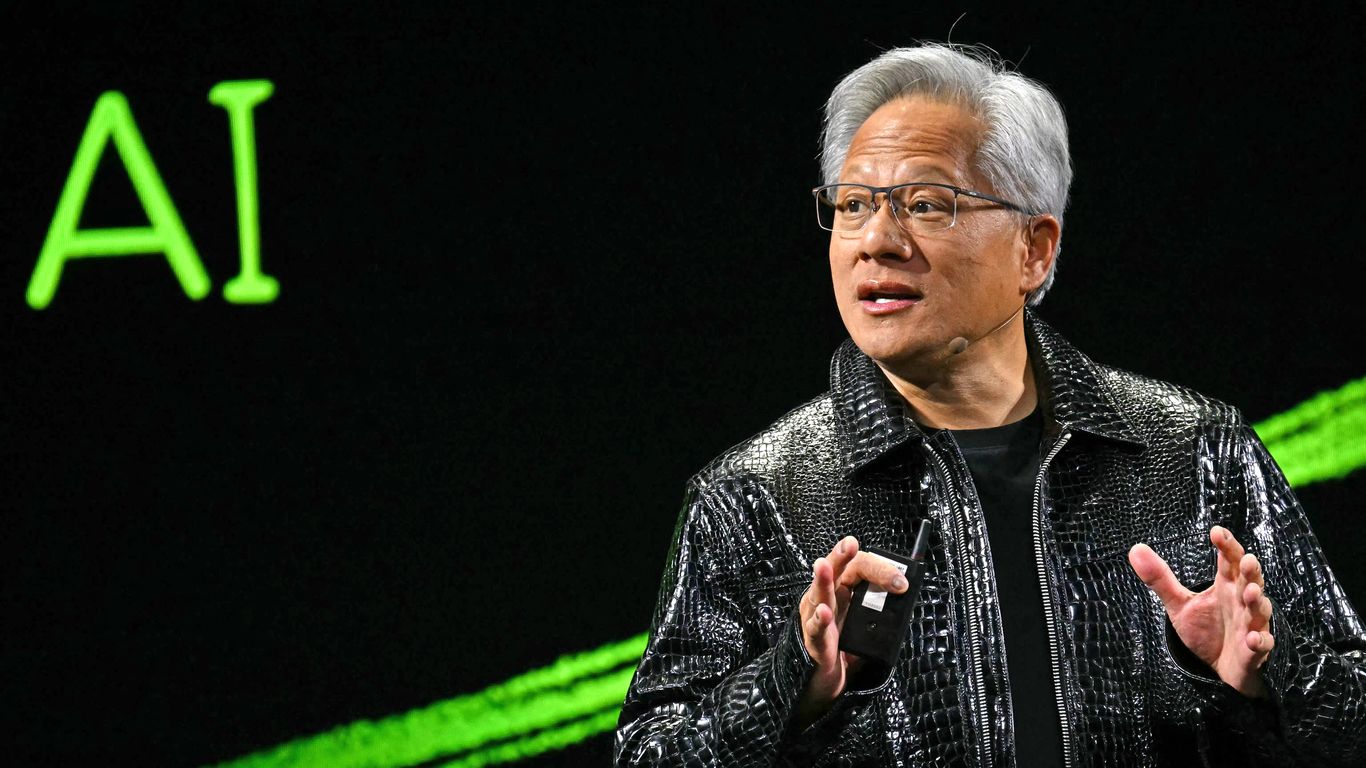
Nvidia CEO Jensen Huang wrote in a blog post Tuesday that decisions about how fast to build AI, who gets access and how to govern it will determine the technology's legacy.
Why it matters: Huang — whose company underpins the AI boom — rarely publishes long essays about the tech's broader impact, offering other industry players and investors a rare window into his thinking.
The big picture: Huang argues that chip demand, expansion and hiring are still in the early stages of what he calls a long buildout.
"AI is one of the most powerful forces shaping the world today. It is not a clever app or a single model; it is essential infrastructure," he writes in his seventh blog post since 2016.
"Every company will use it. Every country will build it."
AI is different from software
Huang made the case that AI breaks the model of how traditional software worked.
Traditional software runs on pre-written rules coded by humans. AI systems, he argues, generate answers in real time based on context.
"Every response is newly created. Every answer depends on the context you provide. This is not software retrieving stored instructions. This is software reasoning and generating intelligence on demand," he writes.
The boom can create more jobs
Huang argues AI will create new kinds of jobs, especially in infrastructure and skilled trades.
As the technology handles routine tasks, he writes, companies can serve more customers and expand. This dynamic, he says, ultimately drives hiring.
"Productivity creates capacity. Capacity creates growth," he writes.
Huang has previously suggested "everybody's jobs will be different" from AI. He also famously said at the Milken conference in 2025: "You're not going to lose your job to an AI, but you're going to lose your job to somebody who uses AI."
AI is a five-layer cake
Zoom in: AI can be understood by looking at the "five-layer stack" that Huang describes as "Energy → chips → infrastructure → models → applications."
"Every successful application pulls on every layer beneath it, all the way down to the power plant that keeps it alive," he writes.
Flashback: The "five-layer cake" framework was originally introduced at the World Economic Forum in Davos in January.
"Trillions" more needed for AI infrastructure
What's next: Huang notes that the AI boom is only just beginning and will require trillions of dollars in additional investment.
"We have only just begun this buildout," he writes of data centers and infrastructure. "We are a few hundred billion dollars into it. Trillions of dollars of infrastructure still need to be built."
AI boom has only just begun
The bottom line: "We are still early. Much of the infrastructure does not yet exist. Much of the workforce has not yet been trained. Much of the opportunity has not yet been realized. But the direction is clear."
Ukraine reportedly dispatched interceptor drones and experts to Jordan at Washington’s request to help defend U.S. bases amid escalating Iranian missile and drone strikes in the region.
Nearly seven months ago, Ukrainian officials tried to sell the U.S. their battle-proven technology for downing Iranian-made attack drones. They even made a PowerPoint presentation — obtained exclusively by Axios — showing how it could protect American forces and their allies in a Middle East war.
The Trump administration dismissed the Ukrainians, only to reverse course last week because of more-than-expected drone strikes from Iran.
Why it matters: Snubbing Ukraine's offer ranks as one of the biggest tactical miscalculations by the administration since the bombing of Iran began Feb. 28, two U.S. officials tell Axios.
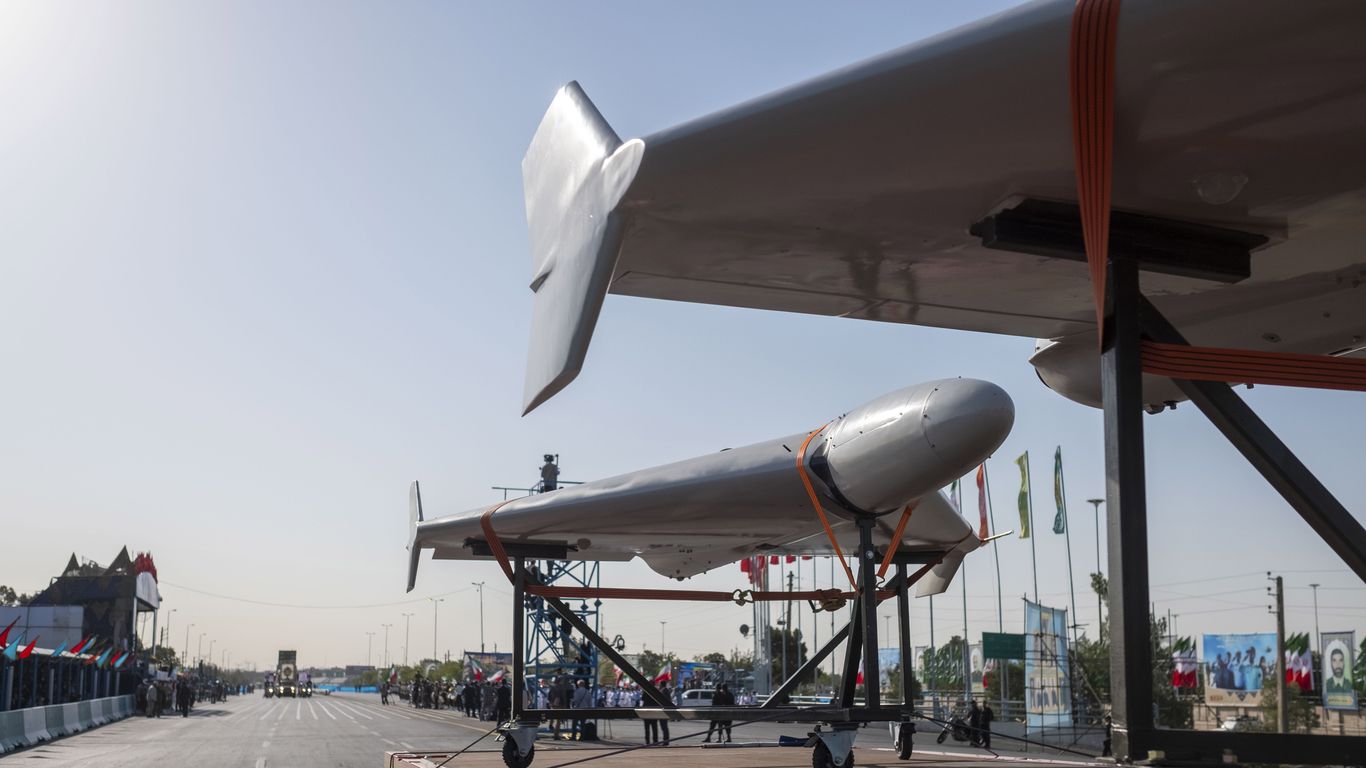
Iran's inexpensive Shahed drones have been linked to the deaths of seven U.S. service members, and have cost the U.S. and its friends in the region millions of dollars to intercept.
"If there's a tactical error or a mistake we made leading up to this [war in Iran], this was it," a U.S. official acknowledged.
Zoom in: Ukraine is the world's most experienced country in combating Shaheds, which Russia has bought, reproduced and labeled as Geran drones by the thousands for its invasion of its western neighbor.
Ukraine has developed a low-cost interceptor drone, among other sensors and air defenses, to shoot down Shahed-style drones.
Inside the room: At a closed-door White House meeting on Aug. 18, Ukrainian President Volodymyr Zelensky offered the interceptor drones to President Trump as a way to strengthen ties and, according to one official, show his thanks for U.S. support in the face of Russian aggression.
The Ukrainians made a PowerPoint presentation to U.S. officials that displayed a map of the Middle East and had this prophetic warning: "Iran is improving its Shahed one-way-attack drone design."
The presentation included the idea of creating "drone combat hubs" in Turkey, Jordan and the Persian Gulf states, where U.S. bases are located, to address the threat from Iran and its proxies.
"We wanted to build the 'drone walls' and all the things necessary like the radar, et cetera," a Ukrainian official said.
The intrigue: "At that meeting ... in August, Trump asked his team to work on it, but they have done nothing," the Ukrainian official said.
A U.S. official who saw the PowerPoint confirmed that Zelensky's team showed the presentation to the administration and theorized the Ukrainian leader is seen by some in the Trump administration as too much of a self-promoter of a client state that doesn't command enough respect.
"We figured it was Zelensky being Zelensky. Somebody decided not to buy it," the official said.
On Thursday, the U.S. formally asked Zelensky for anti-drone help, according to The New York Times.
What they're saying: "Iranian retaliatory attacks are down by 90% because their ballistic missile capabilities are being totally demolished," White House spokesperson Anna Kelly said.
"This characterization made by these cowardly unnamed sources is not accurate and proves that they are simply outside looking in. [Defense] Secretary [Pete] Hegseth and the armed forces did an incredible job planning for all possible responses by the Iranian regime, and the undisputed success of Operation Epic Fury speaks for itself."
Reality check: U.S. officials have reported shooting down the overwhelming majority of Iranian missiles and drones. So far, they say, the seven U.S. deaths have been well below initial estimates of 40 fatalities for the opening of the conflict.
On Friday, the U.S. announced plans to deploy its own Shahed-killing drone system, called Merops, amid complaints from regional allies about the attacks.
One U.S. official told the Associated Press that the response to Iran's drones has so far been "disappointing."
Another U.S. official acknowledged the Ukrainian drones would have helped if deployed sooner, but added that "our performance in theater has been remarkable."
Zoom out: The need for new technology is of acute interest to U.S. Army Secretary Dan Driscoll, nicknamed "the drone guy" in the Pentagon.
Hegseth rolled out changes last year aimed at outpacing China and Russia in unmanned aerial combat. The Biden administration also had drone-counter-drone initiatives, dubbed Replicator.
The need for the technology is so great that Trump's sons announced a new business venture Monday to supply the Pentagon with Ukrainian drone technology.
By the numbers: An Iranian Shahed is said to cost $20,000 to $50,000, depending on the model. The Ukrainian interceptors are even cheaper.
Concerns about intercepting such a cheap, simple target with a multimillion-dollar munition spiked during U.S. fights against Houthi rebels in Yemen, and have remained high since.
Other countermeasures exist: Footage has emerged of AH-64 Apaches blasting Iranian drones. And the U.K. has promised to send Wildcat helicopters strapped with counter-drone Martlet missiles.
Between the lines: Knowing Trump's "Art of the Deal" mindset, the Ukrainians structured the drone defense offer like a business partnership, promising to help create manufacturing jobs in the U.S.
In return for giving the U.S. access to its drone and anti-drone system production and know-how, Ukraine proposed to buy American weapons.
"Our problem was money. Our resources allowed us to produce only 50% of what we can produce. So we wanted the U.S. to invest the other 50% and have a share of the production," the Ukrainian official said.
Ukraine estimated it could help build as many as 20 million of the weapons to "unleash American drone dominance," the PowerPoint said.
Months later, in November, another U.S. official told Axios that military personnel have "been wanting to go to Ukraine and pull the tech and the tactics from the Ukrainian military ... so that we're innovating and learning."
"The Ukrainians are in a life-and-death, existential crisis, 100%."
In a phone call with CBS News Monday, Trump said "the war is very complete." But at a separate event with Republican lawmakers, he said the U.S. still needed to achieve "ultimate victory."
Fewer than 1 in 10 CEOs of large U.S. companies plan to cut jobs due to AI in 2026, according to a new survey from consultancy KPMG.
Why it matters: The disruptive nature of AI is fostering significant debate over how the economy will evolve.
The big picture: 9% of CEOs plan to reduce their workforce because of AI investments this year, according to the 2026 KPMG U.S. CEO Outlook Pulse Survey.
55% expect to increase hiring in 2026 as a direct result of AI, while 36% expect no change.
Zoom in: U.S. CEOs are optimistic about the potential of AI to improve their businesses over the next five to 10 years, but in the short run they've been underwhelmed by the impact, KPMG CEO Tim Walsh tells Axios.
"I would say the majority of companies right now are not actually realizing nor can they see the return on investment of the AI they're deploying," he says.
Part of the challenge is the actual integration of AI into existing processes and systems is proving to be sluggish, he adds.
"It takes time to revise process" and make "fundamental changes in how companies have done things for many, many years to be able to benefit from the technologies that exist today," Walsh says.
Flashback: In KPMG's larger annual CEO Outlook survey conducted last summer, 35% of global chief executives said they were planning for workforce reductions in some areas over the next two to five years due to AI.
Threat level: While the group in the U.S. pulse survey sees growth opportunities via AI, they also see threats in the form of cyberattacks.
About 9 in 10 CEOs are concerned about malware and phishing attacks powered by AI.
Nearly 6 in 10 are worried about quantum computing attacks on encrypted data.
The fine print: The pulse survey was conducted Jan. 26 through Feb. 17. One hundred U.S. CEOs of companies with revenue over $500 million were surveyed.
The bottom line: The AI disruption story is still being written.
The case of Khalil, who was detained last March, sits at the vanguard of a battle of immigrants' due process and civil rights, and the Trump administration's mass detention and deportation policies.
While the public has historically backed military intervention initially in international conflicts, deep polarization has left the latest strikes against Iran with record-low support.
The Constitution gives Congress the power to declare war, but presidents assert broad authority over use of force and the military. Congress has done little to push back.
The Trump administration, which said it is investigating harassment, sued the University of Pennsylvania after it refused a request to provide information about Jewish students and staff.
With the removal of FDA warning labels, hormone therapy to treat symptoms of menopause has grown in popularity. Now some patients are reporting delays in filling prescriptions for estrogen patches.
Policy experts say new SNAP changes don't address the challenges faced by single parents. They also argue that losing food assistance will only create more barriers for struggling families.
Voting ends Tuesday night in the district that former Rep. Marjorie Taylor Greene left this year after a feud with President Trump. It's unclear if his pick will win her spot.
It’s primary day in Mississippi, where a younger Democrat is trying to oust a House veteran, and in Georgia, where Marjorie Taylor Greene’s seat is up for grabs.
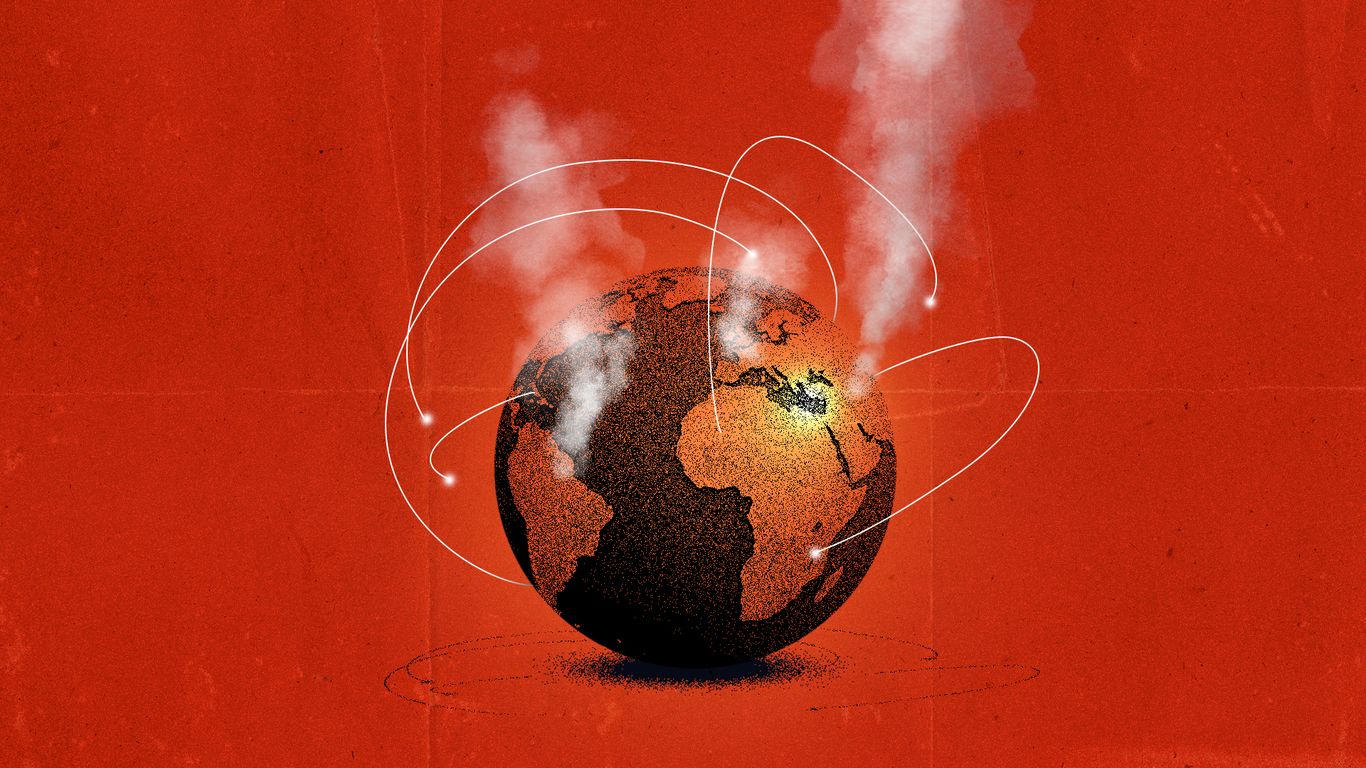
Ten days into President Trump's Iran campaign, the war has gone global.
At least 20 countries are now militarily involved — shooting, shielding or quietly supplying — while a widening energy shock punishes nations far from the front lines.
Why it matters: This isn't World War III. But it may be the closest we've come in decades — drawing in more countries, more great powers and more overlapping conflicts than any crisis since the Cold War.
Zoom in: Iran has struck at least 10 countries since the war began, hitting U.S. and Israeli bases, Persian Gulf capitals, oil infrastructure and civilian areas in an attempt to impose maximum pain on Washington and its allies.
Iran has effectively closed the Strait of Hormuz — the narrow chokepoint through which 20% of the world's oil flows — sending prices for oil, gas, plastics and fertilizers soaring across the globe.
France has dispatched its nuclear-powered aircraft carrier to the Eastern Mediterranean, joining British warships after an Iranian-made drone struck a U.K. air base on Cyprus, a member of the European Union.
Greece and Turkey — bitter rivals within NATO — also have rushed forces to Cyprus, where their fighter jets now face each other across a partition line that has divided the island for 50 years.
Even Australia said Monday it's sending missiles and a radar plane to help the UAE and other Gulf countries defend themselves from Iran.
In the meantime, a U.S. submarine sank an Iranian warship last week off the coast of Sri Lanka — the first American torpedo kill since the final days of World War II.
Between the lines: As the shooting war rages, a shadow conflict is playing out among the world's great powers.
Russia has been sharing satellite imagery of U.S. warships and aircraft with Iran, the Washington Post first reported, helping Tehran target American forces across the region.
Ukraine — which has spent four years defending against the same Iranian-made drones now battering the Gulf — has deployed specialists and low-cost interceptors to help protect the U.S. and its allies.
China, which is set to welcome Trump for a state visit in a matter of weeks, is navigating the war from both sides.
Facing billions of dollars in economic exposure, China has been calling for a ceasefire and pressuring Iran to reopen the Strait of Hormuz, which Beijing relies on for roughly 40% of its oil imports.
At the same time, U.S. intelligence shows China may be preparing to supply Iran with financial assistance, spare parts and missile components, according to CNN.
What to watch: The Iran war is reshaping every other major conflict on Trump's agenda.
Ukraine: U.S.-brokered peace talks planned for Abu Dhabi this week have been postponed indefinitely because of the war. India is back to buying Russian oil after the U.S. waived sanctions to help manage the energy crisis.
Gaza: Trump's flagship peace plan has been on hold since the war began, as the Gulf states that pledged billions to rebuild Gaza now scramble to defend against Iranian missiles.
Taiwan: The war is burning through missile stockpiles the U.S. has spent years building up to deter China in the Pacific — raising urgent questions about what happens if Beijing finally makes a move on Taiwan.
Oil prices would need to stay high for years — not weeks or months — to drive a lasting shift away from the fossil fuel.
The big picture: Every time oil spikes, the same question surfaces: Will this push more people into electric cars or install solar panels onto rooftops?
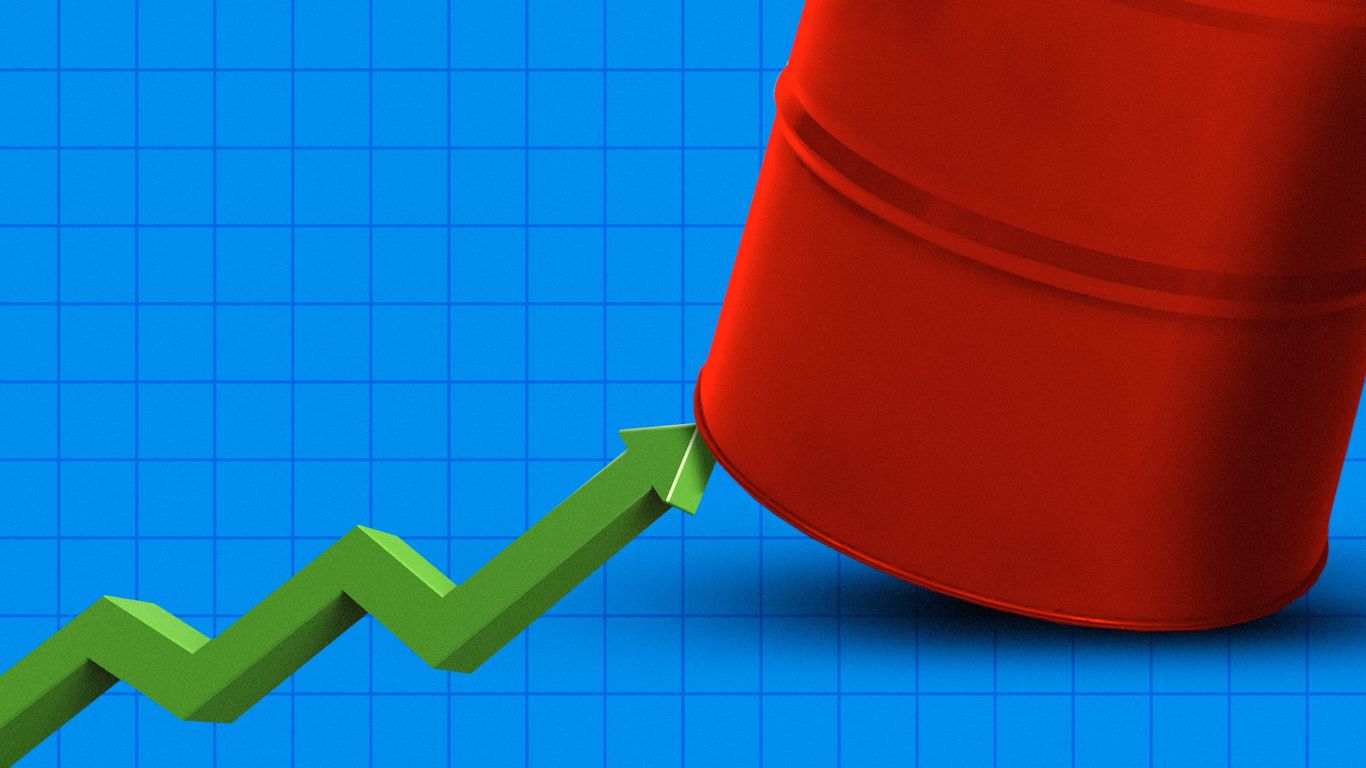
State of play: That's happening again following oil prices zoomed past the $100-a-barrel mark in the wake of the Iran war.
Driving the news: Prices dropped at least temporarily in the wake of President Trump signaling Monday evening he wants a quick end to the conflict, as well as talking up ways to lower oil prices.
Reality check: Energy transitions hinge on stable policies and market signals that last for decades.
Temporary price jolts from unstable geopolitical unrest haven't produced durable change — at least not in the U.S.
What they're saying: "Consumers have been riding an oil price roller coaster for 20 years now," said Bob McNally, who leads consultancy Rapidan Energy Group and advised President George W. Bush on energy security.
This includes everything from the 2008 recession to the 2020 COVID-19 pandemic.
"They've learned that booms follows busts, and vice versa. Absent stable and higher fuel prices, we are unlikely to see a rapid and lasting shift to EVs."
How it works: This recurring debate often skips key distinctions.
Oil is used primarily in transportation and priced on a global market. That's why U.S. gasoline prices rise even when domestic production is strong — and why this article centers mostly on cars, not electricity.
Natural gas is priced more regionally. America's ample supplies help shieldconsumers from global shocks. Gas fuels power plants and industry — but rarely cars.
This is why oil and gas prices don't move in perfect sync.
Zoom out: The U.S. economy is far less oil-intensive than in past eras of price spikes, which cushions the blow compared with the 1970s or even the 2000s.
But people will still face sticker shock at the pump, and their pain is all that will matter to them — not whether it was worse in 50 years ago.
So expect it to show up on the campaign trails.
Zoom in: Even the most extreme scenarios analysts are currentlymodeling would last months — not years.
Rystad Energy looked at two- and four-month interruptions to traffic through the Strait of Hormuz, a vital artery for global oil and gas.
The shorter scenario appears more likely, the firm said Monday, though it warned more extreme outcomes beyond even four months "cannot be ruled out."
Yes, but: There are two caveats — one geographic, one historic.
After Russia invaded Ukraine in 2022, Europe significantly reduced its dependence on Russian gas. This was driven partly by Russia itself cutting off supplies, and then Europe scrambling to replace that fuel and more (though Europe still imports some Russian gas.)
Analysts are calling this moment the biggest disruption in oil-market history, as Ben Geman reported Monday. If geopolitical turmoil were ever going to force a structural move away from oil, this would be the test.
"What matters is not simply how high oil goes, but whether this episode reshapes perceptions of geopolitical risk in a durable way," said Jason Bordoff, founding executive director of Columbia University's Center on Global Energy Policy who previously advised then-President Barack Obama on energy security.
The intrigue: Interest in electric cars tends to surge during periods of high gasoline prices, said Jessica Caldwell, head of insights at Edmunds, the car-buying site.
But she added: "The difference today is that consumers are navigating an extremely tough financial environment," Caldwell said by email, pointing to persistently high interest rates and higher transaction costs.
What we're watching: How long this all lasts.
"Ultimately, adoption may hinge on how long consumers believe geopolitical tensions will continue to put upward pressure on oil prices," Caldwell said.
The price of oil had spiked to nearly $120 a barrel on Monday, drawing remarks by President Trump that he believed the war on Iran was “very complete.”
The Federal Aviation Administration issued a ground stop for JetBlue flights early Tuesday at the airline’s request. JetBlue later said a “system outage” had been restored and that operations had resumed.