Through these he has given us his very great and precious promises, so that through them you may participate in the divine nature, having escaped the corruption in the world caused by evil desires.2 Peter 1:4
Flash floods are notoriously difficult to predict, but Google might have a novel solution. The company just revealed Groundsource, a prediction tool for flash floods that uses Gemini to source data from old news reports. This is the first time it has used a language model for this type of work.
Flash flood prediction models need historical data and model training that often doesn't exist. Our solution: Groundsource, a new AI-powered methodology that uses Gemini to transform 5M+ global reports into a precise dataset of 2.6M+ flood events.
Google tasked Gemini with sorting through 5 million news articles from around the world and isolating flood reports. It transformed this data into a geo-tagged series of chronological events. Next, researchers trained a model to ingest current weather forecasts and leverage the Groundsource data to determine the likelihood of a flash flood in a given area.
We don't have any concrete information as to how accurate Google's forecast model is, though that should come over time. One trial user did say it helped his organization respond quicker to localized weather events. For now, the company is highlighting risks for urban areas in 150 countries via its Flood Hub platform. Google is also sharing its data with emergency response agencies in these locations.
Google
There are some limitations here. The model can only identify risk across a 20-square-kilometer area. It's also not quite as precise as the US National Weather Service's flood alert system, because Google's model doesn't integrate local radar data. This data typically enables real-time tracking of precipitation. However, the platform's been designed to work in areas that don't typically have access to that kind of weather-sensing infrastructure.
Juliet Rothenberg, a program manager on Google's Resilience team, hopes that this technology can eventually be used to predict other tricky phenomena. This includes stuff like heat waves and mudslides.
"We’re aggregating millions of reports,” she told reporters this week. "It enables us to extrapolate to other regions where there isn’t as much information."
This article originally appeared on Engadget at https://www.engadget.com/ai/google-built-a-flash-flood-prediction-tool-using-gemini-and-old-news-reports-154542963.html?src=rss
The first season of a TV show is a tricky thing. It has to convince people to watch it and justify the show’s existence to the network (or streaming service) execs. It has to deal with actors and writers who may not have fully dialed into the characters and world yet. There are some shows with absolutely stellar first seasons — Stranger Things, Veronica Mars and Ted Lasso are a few — but many other hit shows stumbled out of the gate, like The Office and Supernatural.
Star Trek is not immune to this phenomenon. The Original Series had a decent first season, with classic episodes like “The City on the Edge of Forever.” But the next four shows all have rather weak beginnings, with even fan-favorite The Next Generation stumbling badly with episodes like “Code of Honor.” That show picked up in season three, beginning a trend called “Growing the Beard,” in reference to how Commander Riker’s new beard coincided with the uptick in quality.
This trend unfortunately continued into the current era, with 2017’s Star Trek: Discovery delivering a first season with an overwhelmingly dour tone and a lot of franchise changes that didn’t sit well with fans. The show made some tweaks in season two (including a change in setting that involved traveling 900 years into the future), and showed a lot of improvement with season three. Picard also floundered horribly, with an uneven first season that killed off some fan-favorite characters and also turned the title character into an android.
Things started looking up after that, with shows like Strange New Worlds all posting strong outings with their first go-arounds. While episodes like “A Quality of Mercy” and “Lift Us Where Suffering Cannot Reach” may not make the list of all-time classics, there are no outright stinkers. It seemed like the franchise as a whole was finally finding its footing in this new streaming era.
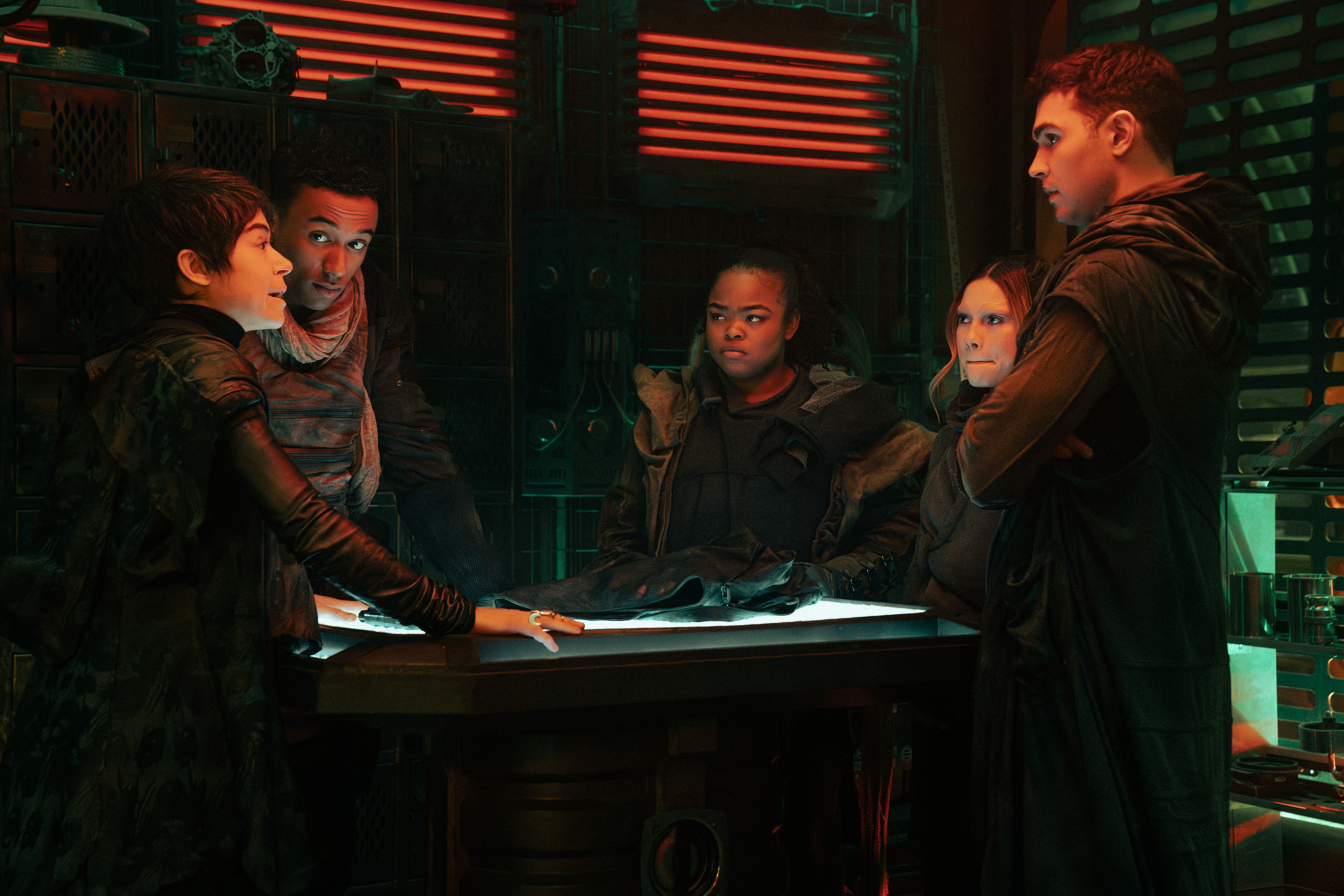
L-R: Tatiana Maslany as Anisha, Sandro Rosta as Caleb, Kerrice Brooks as SAM, Bella Shepard as Genesis, and George Hawkins as Darem in season 1, episode 9, of Star Trek: Starfleet Academy streaming on Paramount+.
Michael Gibson/Paramount+
That leads us to Starfleet Academy, which debuted in January on Paramount+. Prior to its premiere, the internet was full of people deriding it as “CW Trek” and declaring that they don’t want to watch a show about “teenyboppers” that wasn’t “real” Star Trek. Now that the show has finished its first season… the internet is still full of people complaining. But many folks who were wary of it at the beginning have been pleasantly surprised — every day there seems to be multiple posts on various Star Trek subreddits along the lines of “Starfleet Academy is actually good?!?” I personally didn’t enjoy the first episode, but episode two turned me around rather quickly, and it seemed that every week brought new converts.
Granted, 10 episodes is a short amount of time to make an impact, but Starfleet Academy did a lot with that number. Four of the episodes are dedicated to the ongoing villainy of Nus Braka, a murderous pirate played with scene-chewing delight by Paul Giamatti. These have all been pretty straightforward adventure stories, which also did a good job of fleshing out not only Braka, but cadet Caleb Mir, whose mother went to prison because of Braka.
The emphasis on Caleb in the first episode made it seem like the show would focus on him, much in the way Discovery focused on Michael Burnham, but he took a back seat as the show explored the other characters as well as its setting. Episode two, “Beta Test,” focused on diplomacy, a long-standing theme of Star Trek, and even shook up the status quo by moving the Federation headquarters from Earth to Betazed.
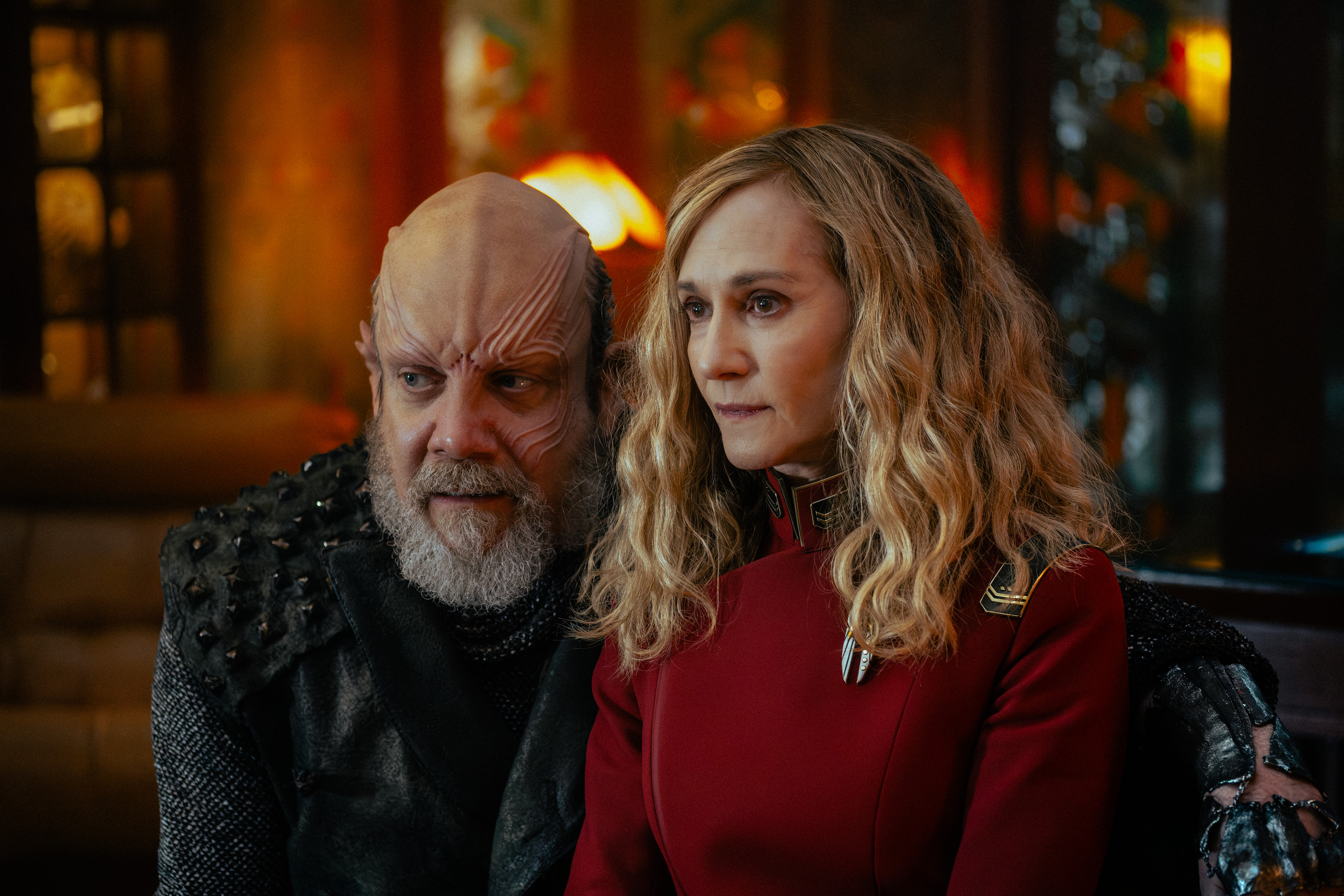
Paul Giamatti as Nus Braka and Holly Hunter as Captain Nahla Ake in season 1, episode 6, of Star Trek: Starfleet Academy streaming on Paramount+.
Brooke Palmer/Paramount+
Episodes four and five were more personal stories, with “Vox in Excelso” focusing on soft boy Klingon character Jay-Den as well as the fate of his race in general after hundreds of years, while “Series Acclimation Mil” also gave us characterization of photonic being Sam along with some heartfelt fan service for the Deep Space Nine fandom. Sam would also shine once more in “The Life of the Stars,” an episode that dealt with trauma, but also (again) delivered fan service in a way that didn’t feel like pandering because of how it was used to develop not just Sam, but also the Doctor, a legacy character from Voyager.
It’s not that every episode in season one of Starfleet Academy is a masterpiece – “Vitus Reflux” and “Ko’Zeine” are somewhat weak – but none of them are outright bad, making the batting average of the season rather high. That bodes well for word-of-mouth, as it's easier to recommend a show when you don't have to couch it with excuses about how it gets good “eventually.”
It will need that word-of-mouth if it wants to get through a complete four seasons of schooling; season two just finished filming so we're guaranteed at least that, but there's a lot up in the air for not just the show, but the entire franchise. Strange New Worlds season four will debut later this year, and then we have an abbreviated season five to look forward to. But past that, nothing firm is on the horizon: Starfleet Academy hasn't been renewed yet, and projects like the Tawny Newsome-helmed comedy show are still in development with nothing tangible revealed yet.
Newsome played Beckett Mariner on Lower Decks and worked in the writers room for Starfleet Academy — she's an example of how Paramount has been building up a roster of talent behind the scenes for the franchise who, even when a show is new, understand the universe and, more importantly, how to work together to make good TV. And that's going to be important in the next year or so, as Paramount makes decisions about the future of the franchise in the shadow of the recent Skydance merger and the upcoming Warner Bros. purchase. Star Trek has an uphill battle ahead of it, but at least Starfleet Academy’s first season has made it an easier climb.
This article originally appeared on Engadget at https://www.engadget.com/entertainment/starfleet-academy-is-the-best-first-season-of-a-star-trek-show-ever-133000945.html?src=rss
Honda has announced it is canceling three electric vehicles it was months from starting production on at its EV Hub in Ohio. The Honda 0 SUV, the Honda 0 sedan and the Acura RSX are all being wound down. The company showed off all three models, and touted them as in near-production form at CES 2025. Unlike the Honda Prologue and Acura ZDX, which run on GM's Ultium platform, the scrapped models were built on Honda's own Zero platform and would have been its first fully in-house EVs.
Honda in part blamed the elimination of federal EV tax credits, eased fossil fuel regulations and US tariffs for the decision. The company said US demand for electric vehicles had slowed because of the policy changes. In China, it admitted it could not match the value offered by newer manufacturers building software-driven vehicles on shorter production cycles. CEO Toshihiro Mibe said at a press conference that the demand shift had made EV profitability "very difficult," according to Reuters.
The company said it will redirect resources toward next-generation hybrids and only bring EVs to market when demand justifies it. It also shared plans to expand in India, where it expects the hybrid market to expand. Honda is not alone in pulling back from EV production, with brands like Hyundai, Kia, Volkswagen, Porsche and Ford having all scrapped or delayed major US EV projects since federal policy shifted.
The total restructuring of its EV business could cost Honda up to 2.5 trillion yen ($15.7 billion), with the company set to lose money for the first time since going public in 1957. Mibe and Executive Vice President Noriya Kaihara will forgo 30 percent of their compensation for three months, with other senior executives giving up 20 percent. Honda said it plans to share a detailed long-term strategy at a press conference in May.
This article originally appeared on Engadget at https://www.engadget.com/transportation/evs/honda-cancels-three-evs-that-were-months-away-from-us-production-155523384.html?src=rss
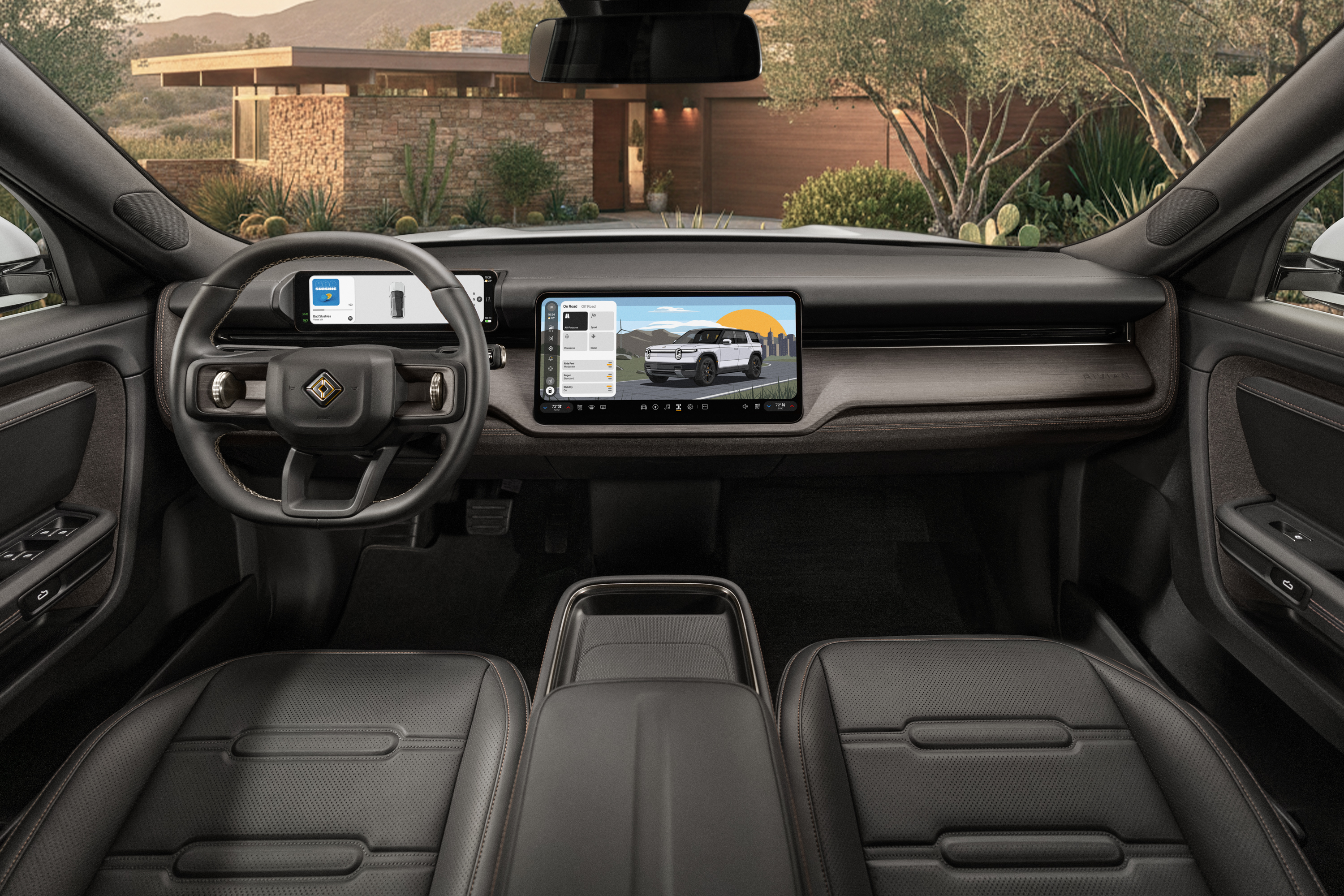
Ahead of its official release later this spring, today Rivan is announcing full pricing and trim levels for its long-awaited R2 electric SUV.
The rollout for the company's first mid-size (two-row) offering will be similar to its previous vehicles, with more expensive premium models hitting the road first this spring, followed by more affordable configurations becoming available later this year and into 2027. This timeline is especially important for anyone hoping to snag the $45,000 base model of the R2, which isn't expected to go on sale until sometime in late 2027. The R2 Performance with Launch Package and R2 Premium trims will arrive initially as model year 2027 vehicles, followed by the R2 Standard (MY 2028) next year.
The new R2 with Rivian's Black Crater interior
Rivian
Some features that will be standard on every R2 are a native NACS charging port and Autonomy+ hardware. However, for the latter, while new vehicles will come with a free 60-day trial of Autonomy+, once that expires, owners will need to choose between a one-time fee or a monthly subscription to continue using Rivian's enhanced hands-free driving tech.
Regardless of which trim or performance package you prefer, the arrival of the R2 is a huge deal for Rivian as it represents the company's first true mass-market vehicle that looks to bring a lot of the tech and engineering used in the R1T and R1S to a more affordable price point.
For a closer look at the R2's trim levels and pricing, see the breakdown below.
R2 Performance with Launch Package
Available Spring 2026 starting at $57,990
Features a dual-motor AWD setup with 656 horsepower and 609 lb-ft of torque
EPA-estimated range of up to 330 miles
0 to 60 time of up to 3.6 seconds
Notably, the Launch Package will include a free lifetime subscription to Autonomy+, along with 20-inch Black Sand all-terrain wheels, a limited Rivian Green anodized key fob, exclusive Launch Green exterior paint option (which will be a paid upgrade) and a tow package that supports up to 4,440 pounds of towing capacity.
Other inclusions on the Performance trim include an Esker Silver exterior, semi-active suspension, Compass Yellow brake calipers and rear drop glass. This config also features Rivian's Matrix LED headlights with adaptive high beams, integrated tow hooks, a flashlight that can be stowed inside the driver door and 21-inch tungsten all-season wheels.
The interior features birch wood accents with a Black Crater color scheme along with heated and ventilated front readers, heated steering wheel, heated rear outboard seats and 12-way adjustment with lumbar support for the driver and front passenger.
R2 Premium
Available late 2026 starting at $53,990
Features a dual-motor AWD setup with 450 horsepower and 537 lb-ft of torque
EPA-estimated range of up to 330 miles
0 to 60 time of up to 4.6 seconds
The premium trim includes many of the same features as the Performance model, but with smaller 20-inch bicolor carbon all-season wheels and fewer drive modes (there's no option for rally, soft sand and launch).
R2 Standard (aka the RWD Long Range configuration)
Available first half of 2027 starting at $48,490
Features a single motor RWD setup with 350 horsepower and 355 lb-ft of torque
Rivian-estimated range of up to 345 miles
0 to 60 time of 5.9 seconds
Finally, the R2 Standard variant features a slightly more spartan kit consisting of heated front seats, a heated steering wheel, 12-way seats (but only for the driver) and 19-inch machine graphite wheels.
R2 Standard (aka the base model)
Available late 2027 starting at $45,000
Rivian-estimated range of 265+ miles
More detailed info will be released closer to launch
This article originally appeared on Engadget at https://www.engadget.com/transportation/evs/rivians-r2-ev-arrives-this-spring-with-a-58000-price-tag-150000363.html?src=rss
Uber has launched a new invite-only luxury ride experience called Uber Elite. Aimed at "executives, frequent travelers, and riders looking for a more elevated experience," it sounds like an upgraded version of Uber Black for the, well, uber-rich.
A ride booked through Uber Elite will be operated by a professional chauffeur driving a new-model luxury vehicle less than three years old. An Elite-only "Meet and Greet" feature allows riders to pre-arrange to be picked up in the airport terminal they arrive at from a flight, with their chauffeur dutifully awaiting them at baggage claim.
Uber says all Elite rides include chargers, bottled water, mints and premium hand wipes. If those perks are deemed too basic by the customer, they can also request sparkling water or champagne in the app ahead of their ride, and Uber says it’ll work with its partners to accommodate them "where feasible." Once an Uber Elite trip is booked, the rider can also take advantage of round-the-clock phone support.
The new luxury service is available through the Uber app, as well as via Uber Reserve and Uber for Business. Rides can be booked one hour in advance or up to 90 days ahead.
Uber Elite is launching first in Los Angeles and San Francisco, with New York to follow soon, and then other cities in the US and internationally. Invitations will first be extended to frequent Uber Black and Uber for Business users, before the service is eventually made available to all riders. If you think you’re important enough, you can join a waitlist right now.
This article originally appeared on Engadget at https://www.engadget.com/transportation/uber-is-shooting-for-even-more-upscale-clientele-with-uber-elite-150620441.html?src=rss
Microsoft has unveiled Copilot Health, an AI-powered tool it claims can help make sense of your medical records, health history and fitness data from wearables, should you grant it access to that information. The company said it will be in a "separate, secure space" in the Copilot app and that the idea is to help provide you with more context and insights so you can ask your doctor the right questions when you see them.
Copilot Health is designed to help you better understand your medical information as a whole, Microsoft says. It is not "intended to diagnose, treat or prevent diseases or other conditions and is not a substitute for professional medical advice," the company pointed out in a blog post.
The tool can pull in activity, fitness and sleep data from more than 50 devices, including Apple Watch, Oura and Fitbit. Through HealthEx, it can access health records that include visit summaries, medication details and test results from more than 50,000 hospitals and provider organizations in the US. It can tap into lab test results from Function, should you allow it to do so.
Copilot Health can take all those details and apply "intelligence to turn them into a coherent story," such as helping you pinpoint the reasons why you don't sleep too well, the company suggested. It can access real-time provider directories in the US to help users find clinicians based on factors like location, specialty, spoken languages and insurance coverage.
Microsoft says that, across AI-powered consumer products like Copilot and Bing, users ask more than 50 million health-related questions every day. "We’ve improved the quality and reliability of answers by elevating information from credible health organizations across 50 countries, as verified by our clinical team using principles independently established by the National Academy of Medicine," the blog post states. "Responses include clear citations with easy links to source material, alongside expert‑written answer cards from Harvard Health."
As far as privacy is concerned, Microsoft says Copilot Health data and conversations are siloed from the broader Copilot app and there are extra access and safety controls in place, including "encryption at rest and in transit." You can delete your information and cut off the app's access to health records and wearable data at any time. Microsoft also notes that it won't use your Copilot Health information to train its models.
The company explained that Copilot Health was informed by its responsible AI principles. Microsoft built the tool in collaboration with its own clinical team and with the expertise and feedback of more than 230 physicians from dozens of countries. "Copilot Health has achieved ISO/IEC 42001 certification, the world’s first standard for AI management systems, meaning an independent third party has verified how we build, govern and continuously improve the AI behind this service," it noted.
Microsoft has opened up a waitlist for those interested in trying Copilot Health. The tool will initially be available in English in the US for those aged 18 and over. The company is working on adding support for more language and voice options and it will announce availability for those and other territories down the line.
While users will be able to try Copilot Health for free at first, Microsoft plans to charge for access via a subscription, according to The New York Times. The company has not yet disclosed pricing details.
The Copilot Health announcement comes just a couple of days after Amazon expanded its Health AI tool beyond One Medical. It's now available on the Amazon website and app. Prime members in the US have the option to chat about certain conditions with a One Medical provider via direct message at no extra cost. Earlier this year, OpenAI announced that it was testing ChatGPT Health. Anthropic has healthcare tools as well.
Given how tough it is for many folks to access affordable healthcare and the fact their data and health records are often spread across a number of providers, some might believe there are benefits of using such tools from AI companies.
However, there's a big difference between tracking your sleep or calling your doctor after an Apple Watch detects signs of atrial fibrillation and entrusting all of your medical information to a chatbot. There are also issues like AI hallucinations and chatbots providing users with straight-up bad advice, as well as the possibility that an LLM-based tool might downplay or exaggerate potential risks.
This article originally appeared on Engadget at https://www.engadget.com/ai/microsofts-copilot-health-can-use-ai-to-turn-your-fitness-data-and-medical-records-into-a-coherent-story-152000621.html?src=rss
We consulted preparedness experts and WIRED's team of testers for the essential gear to keep on hand in case of wildfires, earthquakes, and lord knows what else.
Google has announced that GFiber is merging with Astound Broadband, in an agreement that sees Astound’s parent company Stonepeak become the majority owner, with Alphabet retaining a minority stake.
No financial specifics were detailed in a press release, but the new combined business will be an independent provider led by GFiber’s executive team, who Google says will use its "expertise in high-speed fiber innovation to manage the combined network footprint." Astound already serves over one million customers across the US, and by joining forces Google says the two providers will be able to grant better internet access to more communities.
GFiber, formerly known as Google Fiber, has been around for nearly 15 years, and currently offers speeds of up to 8Gbps on its $150/month Edge 8 Gig plan. A 20 Gig service was expected to leave early access later in 2026.
The fiber broadband service is part of Alphabet’s "Other Bets" portfolio, which also includes Waymo, Verily, and Wing, a combined segment that recorded an operating loss of $16.8 billion in 2025, CNBCreports. The company’s deal with Stonepeak is subject to regulatory approval and is expected to close in Q4 of this year.
This article originally appeared on Engadget at https://www.engadget.com/big-tech/googles-gfiber-internet-business-is-merging-with-astound-broadband-132832086.html?src=rss
It’s not just the major social platforms that know how effective an endless scroll of short videos is at hijacking your dopamine system. Disney+ is adding Verts, a selection of short vertical clips you can scroll through to keep your brain chemistry happy when you are in the bathroom so inclined. The company says it’s a “dynamic feed” to help users “quickly find their next favorite watch,” letting you jump straight in to see the full movie or TV show the clip hails from. Not to mention the side benefit of elbowing out those social platforms, many of which use cut-down clips of Disney-owned content anyway.
Disney said it would be adding vertical video to its premiere streaming platform back in January, and it also launched Verts on the ESPN app last year. Today, it said the addition of vertical clips drove “additional engagement,” but neglected to mention by how much. It's worth noting Disney's not an outlier here — Netflix announced a similar pivot back in January as well.
The company does say, however, that its recommendation engine has an “advanced algorithm” to ensure the clips are relevant to each user. Naturally, Disney is happy to lean on the century or more of content in its library, but also said Verts could broaden out to include “content from creators that reflects our fandoms.” Which you could (and should) take as a plan to at least try to put a tank or two on YouTube’s front lawn.
This article originally appeared on Engadget at https://www.engadget.com/entertainment/streaming/disney-gets-its-own-time-sucking-vertical-video-section-133308487.html?src=rss
The first season of a TV show is a tricky thing. It has to convince people to watch it and justify the show’s existence to the network (or streaming service) execs. It has to deal with actors and writers who may not have fully dialed into the characters and world yet. There are some shows with absolutely stellar first seasons — Stranger Things, Veronica Mars and Ted Lasso are a few — but many other hit shows stumbled out of the gate, like The Office and Supernatural.
Star Trek is not immune to this phenomenon. The Original Series had a decent first season, with classic episodes like “The City on the Edge of Forever.” But the next four shows all have rather weak beginnings, with even fan-favorite The Next Generation stumbling badly with episodes like “Code of Honor.” That show picked up in season three, beginning a trend called “Growing the Beard,” in reference to how Commander Riker’s new beard coincided with the uptick in quality.
This trend unfortunately continued into the current era, with 2017’s Star Trek: Discovery delivering a first season with an overwhelmingly dour tone and a lot of franchise changes that didn’t sit well with fans. The show made some tweaks in season two (including a change in setting that involved traveling 900 years into the future), and showed a lot of improvement with season three. Picard also floundered horribly, with an uneven first season that killed off some fan-favorite characters and also turned the title character into an android.
Things started looking up after that, with shows like Strange New Worlds all posting strong outings with their first go-arounds. While episodes like “A Quality of Mercy” and “Lift Us Where Suffering Cannot Reach” may not make the list of all-time classics, there are no outright stinkers. It seemed like the franchise as a whole was finally finding its footing in this new streaming era.
L-R: Tatiana Maslany as Anisha, Sandro Rosta as Caleb, Kerrice Brooks as SAM, Bella Shepard as Genesis, and George Hawkins as Darem in season 1, episode 9, of Star Trek: Starfleet Academy streaming on Paramount+.
Michael Gibson/Paramount+
That leads us to Starfleet Academy, which debuted in January on Paramount+. Prior to its premiere, the internet was full of people deriding it as “CW Trek” and declaring that they don’t want to watch a show about “teenyboppers” that wasn’t “real” Star Trek. Now that the show has finished its first season… the internet is still full of people complaining. But many folks who were wary of it at the beginning have been pleasantly surprised — every day there seems to be multiple posts on various Star Trek subreddits along the lines of “Starfleet Academy is actually good?!?” I personally didn’t enjoy the first episode, but episode two turned me around rather quickly, and it seemed that every week brought new converts.
Granted, 10 episodes is a short amount of time to make an impact, but Starfleet Academy did a lot with that number. Four of the episodes are dedicated to the ongoing villainy of Nus Braka, a murderous pirate played with scene-chewing delight by Paul Giamatti. These have all been pretty straightforward adventure stories, which also did a good job of fleshing out not only Braka, but cadet Caleb Mir, whose mother went to prison because of Braka.
The emphasis on Caleb in the first episode made it seem like the show would focus on him, much in the way Discovery focused on Michael Burnham, but he took a back seat as the show explored the other characters as well as its setting. Episode two, “Beta Test,” focused on diplomacy, a long-standing theme of Star Trek, and even shook up the status quo by moving the Federation headquarters from Earth to Betazed.
Paul Giamatti as Nus Braka and Holly Hunter as Captain Nahla Ake in season 1, episode 6, of Star Trek: Starfleet Academy streaming on Paramount+.
Brooke Palmer/Paramount+
Episodes four and five were more personal stories, with “Vox in Excelso” focusing on soft boy Klingon character Jay-Den as well as the fate of his race in general after hundreds of years, while “Series Acclimation Mil” also gave us characterization of photonic being Sam along with some heartfelt fan service for the Deep Space Nine fandom. Sam would also shine once more in “The Life of the Stars,” an episode that dealt with trauma, but also (again) delivered fan service in a way that didn’t feel like pandering because of how it was used to develop not just Sam, but also the Doctor, a legacy character from Voyager.
It’s not that every episode in season one of Starfleet Academy is a masterpiece – “Vitus Reflux” and “Ko’Zeine” are somewhat weak – but none of them are outright bad, making the batting average of the season rather high. That bodes well for word-of-mouth, as it's easier to recommend a show when you don't have to couch it with excuses about how it gets good “eventually.”
It will need that word-of-mouth if it wants to get through a complete four seasons of schooling; season two just finished filming so we're guaranteed at least that, but there's a lot up in the air for not just the show, but the entire franchise. Strange New Worlds season four will debut later this year, and then we have an abbreviated season five to look forward to. But past that, nothing firm is on the horizon: Starfleet Academy hasn't been renewed yet, and projects like the Tawny Newsome-helmed comedy show are still in development with nothing tangible revealed yet.
Newsome played Beckett Mariner on Lower Decks and worked in the writers room for Starfleet Academy — she's an example of how Paramount has been building up a roster of talent behind the scenes for the franchise who, even when a show is new, understand the universe and, more importantly, how to work together to make good TV. And that's going to be important in the next year or so, as Paramount makes decisions about the future of the franchise in the shadow of the recent Skydance merger and the upcoming Warner Bros. purchase. Star Trek has an uphill battle ahead of it, but at least Starfleet Academy’s first season has made it an easier climb.
This article originally appeared on Engadget at https://www.engadget.com/entertainment/starfleet-academy-is-the-best-first-season-of-as-star-trek-show-ever-133000267.html?src=rss
In recent weeks, Google has been busy adding AI features to all of its most popular apps. Following Gmail and Chrome, Maps is now the latest service to get a Gemini makeover, with a redesign of the driving experience headlining the update.
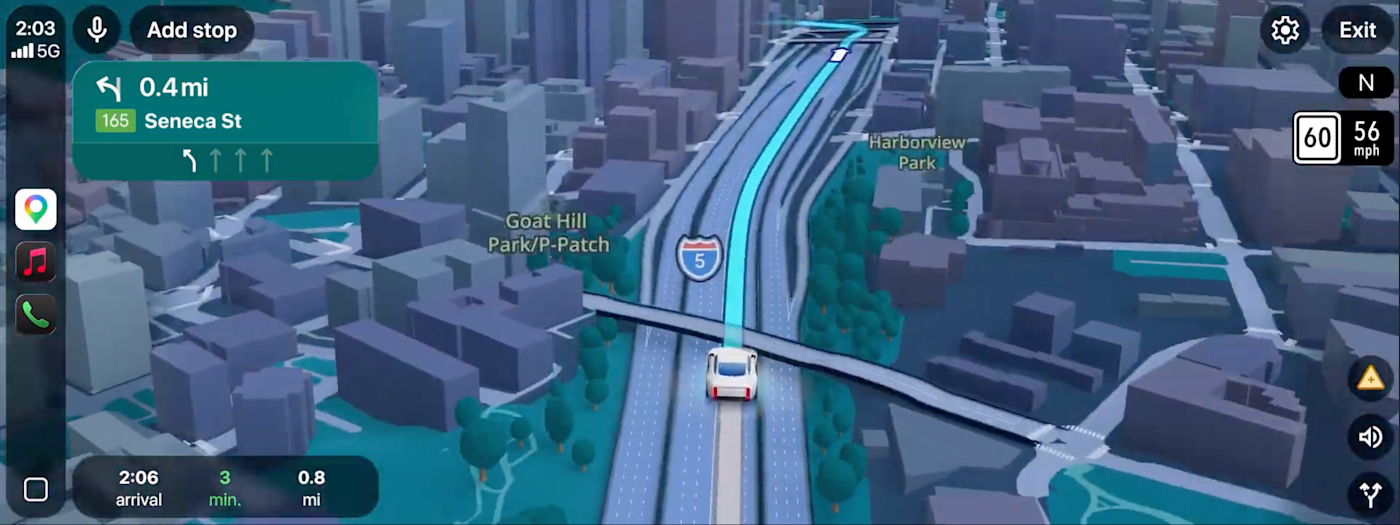
Google is billing the new "Immersive Navigation" mode as the most significant update to driving directions in Maps in about a decade. Now instead of displaying a 2D map of the area around your car, Maps will render the surroundings in 3D. Google believes this transformation will make it easier for drivers to orient themselves, with the new view giving greater depth to nearby landmarks like buildings and overpasses.
Behind the scenes, the company's Gemini models power the experience, deciding how to render elements to remove distractions. Pulling information from Google's Street View database and aerial photos, Google says its models are also smart enough to know when to highlight road elements like crosswalks, traffic lights and stop signs to ensure you don't miss an off ramp or important turn. At the same time, Google has made the voice guidance in Maps sound more natural. For instance, when you're driving along the highway, looking for where you need to get off, the voice assistant will say something along the lines of "go past this exit and take the next one." I imagine this will be especially helpful when driving in a foreign country with unfamiliar road names.
The new intelligence Google has built into the redesigned navigation experience extends to alternative routes. Now, when the app suggests taking a different way of getting somewhere, it will detail the associated tradeoffs with that route. For example, it might tell you it might take longer to travel but you'll encounter less traffic along the way. Before you start your journey, Maps will now also provide a Street View preview of your destination and recommend where to park.
This being a new release in Google's self-proclaimed Gemini era, the company has naturally found a way to add its chatbot to Maps. Inside the app, you'll find a new icon labelled Ask Maps. Tap the icon, write a natural language prompt and Gemini will use all the information contained within Maps to craft a response.
Google is pitching the feature as a way to get information no traditional map can provide. For example, you could ask Gemini to find you a place where you can charge your phone and grab a cup of coffee, all without having to wait a long time in line. Google suggests finding the answer to a specific question like that would have previously required sifting through countless reviews. Not so anymore. The results Gemini produces through Ask Maps will contain personalized results based on places you searched for and saved in the past. You can also act on any recommendations Gemini surfaces, making it easy to book restaurants, save locations and more.
Google is starting to roll out the new immersive driving experience today in the US, with availability to expand over the coming months to Android and iOS devices, as well as CarPlay, Android Auto and cars with Google built-in. Ask Maps, meanwhile, is rolling out to Android and iOS devices in the US and India, with desktop support coming soon.
This article originally appeared on Engadget at https://www.engadget.com/ai/google-maps-brings-a-3d-map-to-your-driving-directions-123000843.html?src=rss
We're all holding onto our phones for longer now, and in order to do that, you'll need some protection. Now, with so many good phone cases on the market, you don't have to compromise if you're also trying to live a more eco-conscious life. The best eco-friendly phone cases offer a great blend of durability and sustainability, helping to reduce plastic waste and better the planet.
Made from natural materials like biodegradable plastics, recycled ocean waste or even sustainable bamboo, eco-friendly phone cases and compostable phone covers prove that you don’t have to sacrifice style or protection to make the greener choice. Whether you’re looking for something sleek and minimal or bold and artistic, there are a number of eco-friendly options to choose from. And remember, even if you can't find a sustainable phone case that fits all your requirements, any phone case that allows you to get a few more years our of your smartphone instead of buying new and upgrading is eco-conscious in itself.
Best eco-friendly phone cases
Eco-friendly phone case FAQs
What makes a phone case eco-friendly?
A phone case can be considered eco-friendly when it’s designed to protect not just your phone but also the planet. What sets these cases apart is the use of sustainable materials like biodegradable plastics, recycled plastic waste or even natural materials like bamboo or flax straw. Instead of contributing to plastic pollution, these materials break down naturally over time, or are made from recycled content that reduces waste.
Eco-friendly cases can also go a step further by being compostable, meaning you can toss them in a compost bin at the end of their life and they’ll decompose into the earth without leaving harmful residues. Plus, many brands behind these cases focus on sustainable practices, like reducing carbon emissions during production or offering recycling programs for old cases.
Are compostable phone cases actually biodegradable?
Yes, most compostable phone cases are designed to break down naturally, but how fast they do depends on the material and the conditions. In a home compost bin, some cases may take months to decompose, while in industrial composting facilities the process is quicker. These cases are usually made from plant-based bioplastics, flax or starch blends which return to the soil without leaving behind harmful residue.
Can you recycle old phone cases?
It depends on the material. Standard plastic cases are tough to recycle because they’re often made with mixed plastics and additives so they usually end up in landfills. Some brands run take-back programs where you can send your old case in and they’ll reuse or up-cycle it into new products. If your case is made from single-type plastic or a recycled blend, check with your local recycling facility but in many cases specialized programs are the best option.
JBL just released two new pairs of headphones in its pre-existing Live line. There's the over-ear Live 780NC and the on-ear Live 680NC.
Both sets of headphones have similar specs, despite the difference in design. The biggest news here is likely the battery life. They max out at 80 hours per charge with regular use, which is a fantastic metric. This shrinks to 50 hours when using ANC, but that's still fairly remarkable. We truly live in a golden age of wireless headphone batteries.
JBL's new headphones can also fully charge in just two hours, which is nice. They also offer the option for multi-point connections. There are two dedicated microphones for phone calls, with clarity assisted by an AI algorithm.
JBL
Both can stream high resolution audio via Bluetooth or a wired connection. The models even look similar, with availability in the same seven colorways. The 680NC, however, is slightly lighter.
There is one major difference between the two. The 780NC includes six microphones for ANC, while the 680NC features four. This likely means that ANC performance will be better with the former, which will be assisted by the design itself. Over-ear headphones offer passive noise isolation.
Those extra microphones do boost the price up a bit. The JBL 780NC headphones cost $250, while the JBL 680NC headphones cost $160. Both are available for purchase right now, with shipments going out by March 15.
This article originally appeared on Engadget at https://www.engadget.com/audio/headphones/jbls-two-new-live-headphones-offer-80-hours-of-battery-each-120044416.html?src=rss
Massage guns used to be simple percussive devices. Now, they use vibrations, hot and cold therapy, and even LED light to ease post-workout pain and promote muscle recovery.
Uber has teamed up with UK self-driving car startup Wayve and Nissan to launch a pilot program for a robotaxi service in Tokyo in late 2026. The program will use Nissan Leaf EVs powered by Wayve’s AI Driver automated vehicle technology, which will then be connected to Uber’s platform. Trained drivers will be behind the wheel at first, as the deployed vehicles gather real-world data to be able to navigate Tokyo’s driving conditions and complex streets that are also a lot narrower than the roads in the US.
Another company backed by Uber, Nuro, will also test its vehicles on Tokyo’s challenging streets soon. Nuro has been trialing its self-driving tech in the US for years now and plans to launch a robotaxi service, as well. They’re not the first companies to take on Tokyo streets, however: Waymo deployed its Jaguar I-PACE autonomous vehicles in the metropolis last year to collect data on its roads and the driving patterns of locals.
The pilot program in Tokyo is just part of Wayve’s and Uber’s plan to roll out a robotaxi service in more than 10 cities around the world. In the future, the companies are planning to offer self-driving vehicles as an option in the city through a licensed taxi partner in Japan.
This article originally appeared on Engadget at https://www.engadget.com/transportation/uber-is-piloting-a-robotaxi-service-in-tokyo-112133871.html?src=rss
US self-driving startup Nuro, which is backed by the likes of NVIDIA, Toyota and Uber, has started testing its autonomous vehicles on Tokyo's challenging streets, Bloomberg reported. The company, which plans to launch a robotaxi service with Uber and Lucid in San Francisco this year, will be testing a "handful" of vehicles in the city. Human safety drivers will be at the wheel, as is required by Japanese law.
Tokyo presents a challenge for autonomous vehicles, given its narrow, crowded streets and left side of the road driving. "Testing the capability of the autonomy system in such an interesting market with some international complexity really is a good pressure test of what the system is capable of," said CEO Andrew Chapin. The company's ultimate goal is to achieve Level 4 autonomy, which allows full self-driving under limited conditions.
Waymo is the other major robotaxi operator testing vehicles in Tokyo in collaboration with Japanese taxi operators Nihon Kotsu and the country's leading taxi app, Go. It has been operating in the nation since April 2025 in collaboration with Toyota.
Nuro has yet to announce which operators or vehicle manufacturers it will be partnering with, but Chapin said it may not limit itself to autonomous rides. "A universal autonomy platform that can be extended to a lot of different applications and form factors is a bit different than the approach Waymo is taking," he told Bloomberg. The company previously teamed with 7-Eleven on autonomous deliveries in Mountain View, California.
Uber plans to have up to 100,000 autonomous vehicles including 20,000 robotaxis powered by Lucid and Nuro, with a rollout starting in 2027. It introduced its new vehicle design recently at CES 2026. Uber is also collaborating with Nissan and Wayve with the aim to introduce pilot cars in Tokyo by late 2026.
This article originally appeared on Engadget at https://www.engadget.com/transportation/nvidia--and-uber-backed-nuro-is-testing-autonomous-vehicles-in-tokyo-081200366.html?src=rss
Google Play has introduced a new feature called Game Trials, which will let you play a portion of paid games for free before you commit to buying them. It’s now rolling out to select paid games on mobile, and it’s coming soon to Google Play Games on PC. Titles that offer Game Trials will show a button marked “Try” on their profile pages. When you click it, you’ll see how long you can play the game before you have to buy it. In Google’s example, the survival and horror game Dredge will give you 60 minutes of free play time, after which you’ll get the option to either buy the game or delete it from your device.
Google has also announced that it’s releasing more paid indie games over the coming months, including Moonlight Peaks, Sledding Game and Low-Budget Repairs. It has launched a new section in the Play store, as well, to feature games optimized for Windows PCs. You can wishlist the games from that section to get a notification when they’re on sale.
Finally, the company is rolling out Play Games Sidekick, the Gemini-powered Android overlay it announced last year, to select games downloaded from Play. Sidekick can show you relevant info and tools for whatever game you're playing without having to do a search query. But if you’d rather ask other people for gaming advice instead of an AI, you can also look at a game’s Community Posts, a feature now available in English for select titles on their Play pages.
This article originally appeared on Engadget at https://www.engadget.com/gaming/google-play-will-let-you-try-a-game-before-you-buy-it-051854016.html?src=rss
In 2024, Microsoft caused a lot of head-scratching and general bemusement with the launch of its "This is an Xbox" marketing campaign. Now, though, it appears the quandary over what is and isn't an Xbox has been resolved. Game Developer noticed that the original blog post on Xbox Wire that kicked off the whole affair has been removed. It seems Xbox will be going a new direction with its future promotions.
Maybe since the new Project Helix hardware it has in the works is more definite attempt to blur console and PC gaming, "This is an Xbox" might have been truly confusing as a tagline. Maybe with the recent changing of the guard at the company, the top brass decided that it was the right time to start fresh with a less meme-able marketing plan. Whatever the reason, we have enjoyed this opportunity to learn about the existential philosophy behind being an Xbox. And fortunately, although the blog post may be gone, the video trailer still exists whenever we need to remind ourselves of the many things that can be Xbox-ified.
This article originally appeared on Engadget at https://www.engadget.com/gaming/xbox/i-guess-this-wasnt-an-xbox-after-all-230154314.html?src=rss
The Strait of Hormuz, a busy waterway off the coast of Iran, has come to a near standstill. If the war drags on much longer, it could mean higher prices for consumer goods around the world.
Apple still hasn’t confirmed a foldable iPhone, and the company’s latest round of product announcements didn’t change that. Apple launched several new devices last week, but there was still no mention of a folding iPhone. Even so, the steady stream of leaks and analyst reports hasn’t slowed. Over the past few months, supply-chain sources and leakers have continued to sketch out Apple’s possible plans, with most signs still pointing to a launch in the second half of 2026.
As with any unannounced Apple hardware, plenty could shift before anything ships. Features can be revised, timelines can move and some ideas may never make it beyond internal testing. Even so, the growing consistency across recent reports offers a clearer picture of how the so-called iPhone Fold might take shape and where it could land in Apple’s lineup.
Below, we’ve rounded up the most credible rumors so far, and we’ll keep this guide updated as new details emerge.
When could the iPhone Fold launch?
Rumors of a foldable iPhone date back as far as 2017, but more recent reporting suggests Apple has finally locked onto a realistic window. Most sources now point to fall 2026, likely alongside the iPhone 18 lineup, with some supply-chain hints suggesting mass production could begin in mid-2026 if development stays on track.
Some reports still claim the project could slip into 2027 if Apple runs into manufacturing or durability issues, particularly around the hinge or display. Given Apple’s history of delaying products that it feels aren’t ready, that remains a real possibility.
What will the iPhone Fold look like?
Current consensus suggests Apple has settled on a book-style foldable design, similar to Samsung’s Galaxy Z Fold series, rather than a clamshell flip phone.
When unfolded, the iPhone Fold is expected to resemble a small tablet like the iPad mini (8.3 inches). Based on the rumor mill, though, the iPhone Fold may be a touch smaller, with an internal display measuring around 7.7 to 7.8 inches. When closed, it should function like a conventional smartphone, with an outer display in the 5.5-inch range.
CAD leaks and alleged case-maker molds suggest the device may be shorter and wider than a standard iPhone when folded, creating a squarer footprint that better matches the aspect ratio of the inner display. New images shared by leaker Sonny Dickson appear to back up that general design direction. The CAD files show what looks like a book-style foldable with a camera plateau similar to the iPhone Air, though with two rear cameras instead of one. The renders also suggest a layout with a punch-hole front camera on the inner display and squared-off edges near the hinge, which would be consistent with earlier reports about the device’s overall form factor.
If that theory holds, it could help explain the Fold’s rumored dimensions. Thickness is expected to land around 4.5 to 4.8mm when unfolded, according to analyst Ming-Chi Kuo, putting it in a similar range to the iPhone Air, and roughly 9 to 9.5mm when folded, depending on the final hinge design and internal layering.
iPhone 17 Pro, iPhone Air
Engadget
Display and the crease question
The display is arguably the biggest challenge for any foldable phone, and it’s an area where Apple appears to have invested years of development.
According to these reports, the panel combines a flexible OLED with a laser-drilled metal support plate that disperses stress when folding. The goal is a display with a nearly invisible crease, something Apple reportedly considers essential before entering the foldable market.
If Apple does use this panel, it would mark a notable improvement over current foldables, which still show visible creasing under certain lighting conditions.
Cameras and biometrics
Camera rumors suggest Apple is planning a four-camera setup. That may include:
Two rear cameras (main and ultra-wide, both rumored at 48MP)
One punch-hole camera on the outer display
One under-display camera on the inner screen
Several sources claim Apple will avoid Face ID entirely on the iPhone Fold. Instead, it’s expected to rely on Touch ID built into the power button, similar to recent iPad models. This would allow Apple to keep both displays free of notches or Dynamic Island cutouts.
Under-display camera technology has historically produced lower image quality, but a rumored 24MP sensor would be a significant step up compared to existing foldables, which typically use much lower-resolution sensors.
iPhone Fold’s hinge and materials
The hinge is another area where Apple may diverge from competitors. Multiple reports claim Apple will use Liquidmetal, which is a long-standing trade name for a metallic glass alloy the company has previously used in smaller components. While often referred to as “liquid metal” or “Liquid Metal” in reports, Liquidmetal is the branding Apple has historically associated with the material.
Liquidmetal is said to be stronger and more resistant to deformation than titanium, while remaining relatively lightweight. If accurate, this could help improve long-term durability and reduce wear on the foldable display.
Leaks from Jon Prosser also reference a metal plate beneath the display that works in tandem with the hinge to minimize creasing — a claim that aligns with reporting from Korean and Chinese supply-chain sources.
Battery and other components
Battery life is another potential differentiator. According to Ming-Chi Kuo and multiple Asian supply-chain reports, Apple is testing high-density battery cells in the 5,000 to 5,800mAh range.
That would make it the largest battery ever used in an iPhone, and competitive with (or larger than) batteries in current Android foldables. The device is also expected to use a future A-series chip and Apple’s in-house modem, with some reports pointing specifically to a next-generation C2 modem as part of Apple’s broader push to reduce reliance on Qualcomm.
Pixel 10 Pro Fold
Sam Rutherford for Engadget
Interface
With the extra screen real estate the iPhone Fold could have while open, software will naturally need to adapt. Bloomberg reports Apple will do that (and encourage developers to do the same) by offering a software interface that’s similar to iPadOS. Apps on the iPhone Fold will offer “iPad-like layouts” with “sidebars along the left edge of the screen,” allowing them to display more information and controls at once.
Despite borrowing interface elements from the iPad, however, Apple’s foldable reportedly won’t run iPadOS or offer the windowed multitasking of the company’s tablets. Instead the iPhone Fold will display apps in splitscreen, in a similar way to foldables like Google’s Pixel 10 Pro Fold.
Estimates currently place the price between $2,000 and $2,500 in the US. Bloomberg has said the price will be “at least $2,000,” while other analysts have narrowed the likely range to around $2,100 and $2,300. That positions the iPhone Fold well above the iPhone Pro Max and closer to Apple’s high-end Macs and iPads.
Despite years of rumors, there’s still plenty that remains unclear. Apple hasn’t confirmed the name “iPhone Fold,” final dimensions, software features or how iOS would adapt to a folding form factor. Durability, repairability and long-term reliability are also open questions. For now, the safest assumption is that Apple is taking its time and that many of these details could still change before launch.
Update, March 11, 5:34PM ET: Added details about the iPhone Fold’s software interface.
This article originally appeared on Engadget at https://www.engadget.com/mobile/smartphones/iphone-fold-rumors-everything-we-know-right-now-including-the-leaked-design-upgrades-price-and-more-130000733.html?src=rss








-for-Sports,-Movies,-and-More.jpg)