[Humble Service in the Body of Christ] For by the grace given me I say to every one of you: Do not think of yourself more highly than you ought, but rather think of yourself with sober judgment, in accordance with the faith God has distributed to each of you.Romans 12:3
While powerhouse nations still dominate, the addition of 16 teams has allowed rising African and CONCACAF sides to prove they belong on the world stage
This story is based on conversations with six U.S., Israeli and Lebanese sources with direct knowledge of the negotiations.
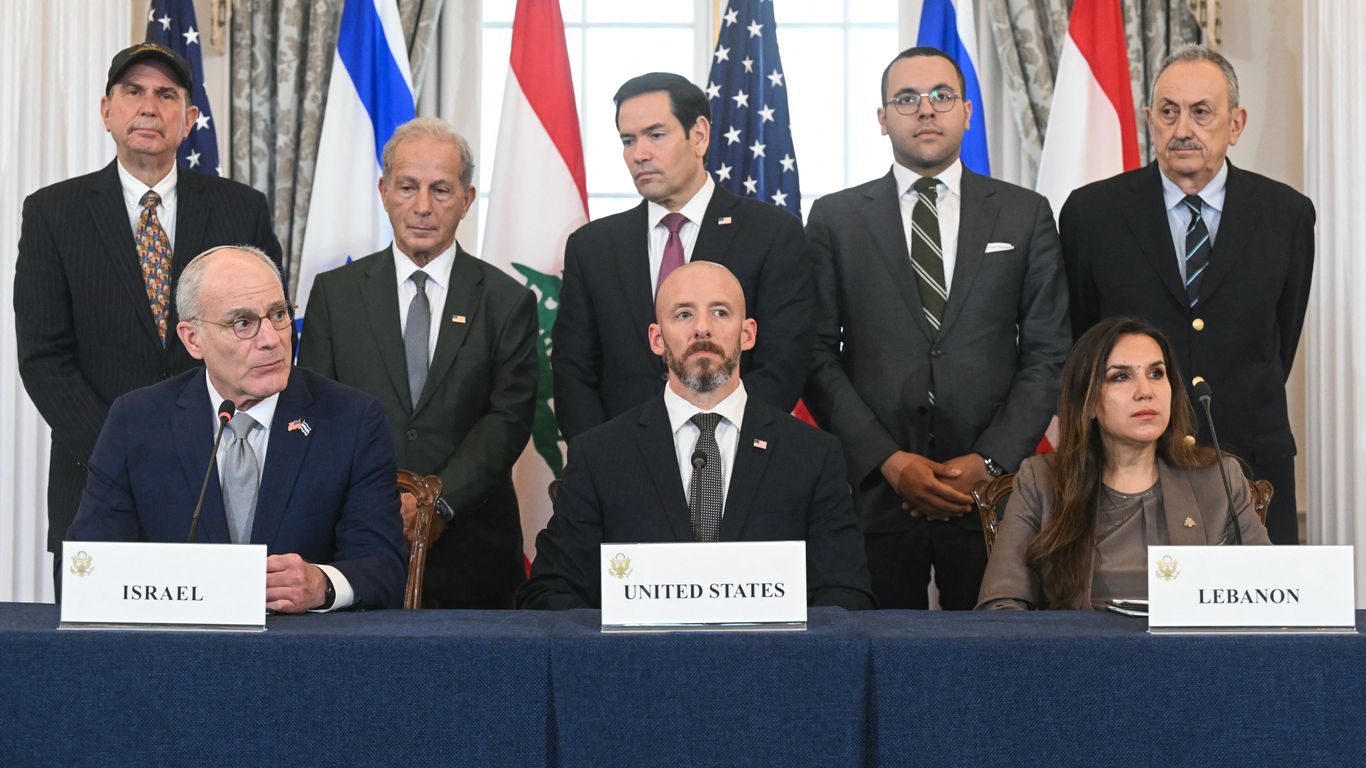
Four days of nonstop negotiations in Washington this week between the Israeli and Lebanese governments were propelled by one clear shared interest: weakening the influence of Hezbollah and Iran in Lebanon, according to U.S., Israeli and Lebanese officials.
Why it matters: The framework brokered by the Trump administration is the most significant political agreement between Israel and Lebanon in four decades — but all parties involved know the vision of peace it lays out may never materialize.
Mixed with the skepticism is deep concern that the deal could lead to a violent response from Hezbollah that could throw the country back into civil war.
The agreement also seems to contradict some of the understandings reached between the U.S. and Iran in Switzerland, and could thus complicate that fragile truce.
The backdrop:Iran managed to wrap the situation in Lebanon into its negotiations with the U.S. in recent weeks.
That resulted in a memorandum of understanding that calls on the parties to observe a ceasefire in Lebanon and ensure the country's territorial integrity — which is actively undermined by Israel's ongoing occupation of southern Lebanon.
During talks in Switzerland last Sunday, the U.S. and Iran agreed to create a new "deconfliction cell," together with Lebanon and the Pakistani and Qatari mediators, to ensure the ceasefire in Lebanon holds.
That shocked both Israeli and Lebanese officials, who saw it as bolstering Hezbollah and legitimizing Iran's influence in the country.
The news also came as Israeli and Lebanese diplomats were preparing for a crucial round of negotiations in Washington.
Behind the scenes: When they met at the State Department on Tuesday, Israeli Ambassador Yechiel Leiter opened the first session with a strongly worded speech calling the new U.S.-Iranian understandings on Lebanon "a train wreck."
Leiter asked the U.S. mediators whether the U.S. was actually still interested in weakening Iran's influence in Lebanon, as the Israel-Lebanon talks had been aiming to do.
Lebanon's representatives followed up with their own demands for clarification. "The Lebanese were on their heels," a source with direct knowledge said.
While the U.S. mediators stressed the goal was to get an Israeli-Lebanese agreement with no outside interference, the first day of the talks was "pretty ugly," a U.S. official conceded.
The parties dug in on their positions, particularly on security issues, and it felt to some participants as though the negotiations were actually moving backward.
Zoom in: The talks took place on two tracks: a security track between military officers, and a political track between diplomats. Senior Pentagon and State Department officials mediated.
The parties worked on three documents: a framework agreement, a security annex, and an agreement on an initial Israeli withdrawal from two "pilot zones," to be replaced by the Lebanese army.
On Wednesday, the negotiations picked up steam. U.S. officials began to think an agreement could be signed the next day.
But on Thursday, the tables turned again. As the day passed, the parties hardened their positions, and the U.S. couldn't bridge the gaps on all three documents to create a single package. The main dispute was over the terms and locations of the Israeli withdrawals.
On Thursday evening, both Israeli Prime Minister Benjamin Netanyahu and Lebanese President Joseph Aoun hit the brakes. Negotiators on both sides asked for more time to consult with their capitals, and the U.S. mediators agreed to extend the talks by a day.
The intrigue: Secretary of State Marco Rubio landed back in Washington on Thursday night after a trip to the Persian Gulf.
Rubio had been speaking by phone with both Netanyahu and Aoun since Tuesday, holding around eight calls in total with the two leaders. Vice President Vance also spoke to each leader at least once.
Rubio emphasized to Netanyahu and Aoun that it was important to President Trump for a deal to be wrapped up by the end of the week.
The high-level attention from Washington "made it clear to both sides that there was a clear sense of urgency here," a source with knowledge said.
Inside the room: On Friday morning, Rubio joined the talks to try to close the final gaps. Also involved in the final push were U.S. chief negotiator Dan Holler, U.S. Ambassador to Lebanon Michel Issa, CENTCOM Marines commander Lt. Gen. Joseph Clearfield,and Pentagon officials Daniel Zimmerman and Michael Dimino.
The U.S. asked Israel for two changes to the text in order to secure the deal, including an Israeli withdrawal from a village in southern Lebanon currently under Israeli occupation and a clear statement that this would mark the beginning of a broader process of redeployment out of Lebanon.
Leiter pressed Netanyahu and other senior Israeli officials to agree in a call that became heated when Netanyahu resisted the changes. Two sources said Leiter raised his voice as he made the case that the deal was an important achievement and Israel needed to sign.
A source close to Leiter said he raised his voice because of the noise on the phone line. Leiter himself told Axios that calls to consult with officials back home are "customary" during negotiations and differences of opinion are "natural."
"During one of the update calls, a professional, substantive, and at times sharp discussion took place, during which a range of views was heard regarding the best way to maximize the achievements of the negotiations while fully safeguarding Israel's vital interests," he said.
Between the lines: "There wasn't a lot of trust between Israel and Lebanon, but eventually both parties understood they needed to get a deal in order to keep control of the process and not allow Iran in," a source with direct knowledge said.
The other side: The agreement immediately increased internal tensions in Lebanon.
Hezbollah tried to organize demonstrations in Beirut against the deal on Friday, but only managed to mobilize several hundred people who were quickly dispersed.
On Saturday, Lebanese security forces took down dozens of posters placed by Hezbollah on the main road to Beirut's international airport, thanking Iran's supreme leader for the ceasefire.
In their place, the Lebanese government hung its own posters with the slogan, "Lebanon first" — some of which were burned by Hezbollah supporters on Saturday night.
What they're saying: Hezbollah leader Naim Qassem declared the agreement with Israel "null and void" and called it "a humiliation, disgrace, and a surrender of sovereignty."
He stressed Hezbollah will continue its "resistance" to the Israeli occupation.
What's next: Later on Saturday, Trump spoke with Aoun and congratulated him on the deal.
Trump said the U.S. would provide everything necessary to implement the agreement and to support Lebanon's sovereignty and the extension of the Lebanese state's authority over the entire Lebanese territory, Aoun's office said.
At the end of the call, Trump told Aoun he looked forward to meeting him soon at the White House. The visit is expected in mid-July.
Over the past few days, tension between the U.S. and Iran has been escalating with another exchange of strikes on Saturday. President Trump threatened on Truth Social to resume the war and "complete the job."
Why it matters: The U.S. and Iran are bombing each other again, putting the tenuous ceasefire in doubt again.
Between the lines: One reason for the renewed fighting seems to be different interpretations of the memorandum of understanding (MOU) to end the war that was signed 10 days ago — especially when it comes to the Strait of Hormuz.
With the situation escalating by the day, it isn't clear if the next round of negotiations between the U.S. and Iranian technical teams planned for Tuesday in Switzerland will actually take place.
Catch up quick: As part of the MOU, Iran committed to make its best efforts to allow safe passage of commercial vessels through the strait. In return, the U.S. lifted its blockade on Iranian ports.
During negotiations in Switzerland last week, the U.S. delegation — headed by Vice President Vance — agreed with Iran to establish a "hotline" between the U.S. military and the IRGC (Islamic Revolutionary Guard Corps), Iran's military command, to coordinate traffic in the strait.
As of Saturday, the "hotline" still wasn't operational. The situation has been escalating as Iran started claiming, again, that ships need to coordinate passage.
On Saturday evening, the U.S. military struck Iranian targets in retaliation for an attack Saturday morning on a commercial tanker.
It was the second wave of U.S. strikes in Iran in 24 hours.
The latest: Iran responded with drone and missile attacks on U.S. bases in Kuwait and Bahrain, according to the IRGC.
Iranian state media quoted the IRGC as threatening more forceful attacks on ships in the Strait of Hormuz, raising the prospect of the peace process coming to a halt.
Earlier Saturday, the IRGC launched an attack drone at the Panama-flagged M/T Kiku tanker, which was passing through the strait with more than 2 million barrels of crude oil, U.S. Central Command (CENTCOM) said.
The incident happened several hours after the U.S. struck Iranian targets, in retaliation for another attack on a commercial ship on Thursday. In addition to the tanker strike, Iran retaliated by attacking targets in Bahrain early Saturday.
CENTCOM said in a statement that U.S. aircraft targeted Iranian military surveillance infrastructure, communication systems, air defense sites, drone storage facilities and minelaying capabilities.
What they're saying: Trump, in a Truth Social post Saturday evening, confirmed the strikes and threatened more.
"There may come a point when we are no longer able to be reasonable, and will be forced to militarily complete the job that we very successfully started," he wrote. "If that happens, the Islamic Republic of Iran will no longer exist!"
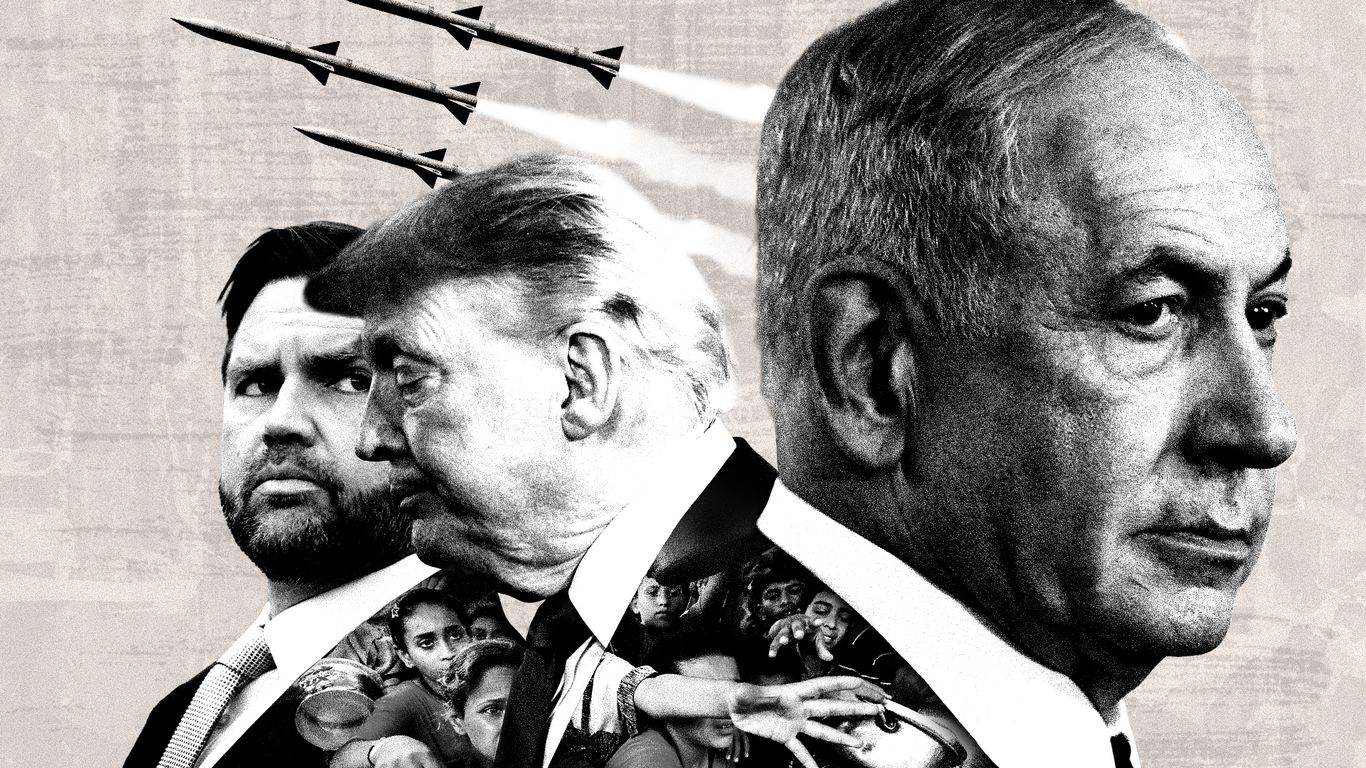
Benjamin Netanyahu lost the Democrats. Now a growing number of Republicans are souring on him and his country, too.
Why it matters: More Republicans, especially younger ones, turned on Israel as its military leveled Gaza — and then Netanyahu alienated President Trump and his team as they sought to end the Iran war.
For 15 years, Netanyahu offset collapsing Democratic support by cultivating Republicans. If Republican support is no longer guaranteed, he has a serious problem — and so does Israel.
The big picture: That problem starts at the highest level of the Republican Party.
In September of last year, as President Trump was pressing Netanyahu to accept a Gaza peace deal, he told the Israeli prime minister that "all the Jews are sick of you" and there would be a "divorce" between the two countries if he refused to go along, according to Maggie Haberman and Jonathan Swan's new book, Regime Change.
Axios reported that Trump called Netanyahu "fucking crazy" and warned his actions risked further isolating Israel around the world. Trump later told Axios in an interview that his relationship with Netanyahu is good, "but we have to keep him a little bit sane."
Trump's possible heir apparent, Vice President JD Vance, rebuked Israeli officials opposing the Iran deal.
"If I was in the cabinet of the Israeli government, I might not be attacking the only powerful ally that I have anywhere left in the entire world," he said.
The strains over the war came as high-profile "America First" anti-interventionists — led by Tucker Carlson, Megyn Kelly and Marjorie Taylor Greene — stoked the backlash against Israel.
Carlson, who left the Republican Party last week, said Netanyahu manipulated Trump into joining the war. He called the president a "slave" to the Israeli prime minister.
Ben Shapiro, the Daily Wire co-founder and staunch Israel defender, has seen his ratings fall as right-wing listeners opposed to U.S. support for Israel turn elsewhere.
Between the lines: Israel has become a new litmus test in the online right's war against the GOP establishment.
Nick Fuentes and his "Groyper" followers have spent years attacking mainstream conservatives for being too loyal to Israel — promoting antisemitic messages that once lived on the fringe but now echo through young conservative spaces.
Bigger platforms have carried versions of the same argument. Carlson and Candace Owens have sharply escalated anti-Israel rhetoric, often casting U.S. support for Israel as evidence that "America First" has been corrupted by foreign influence.
By the numbers: Cracks are forming in the Republican firewall on Israel:
An April Pew Research Center poll found that four in 10 Republicans have an unfavorable view of Israel. Fifty-seven percent of Republicans aged 18 to 49 felt that way, while one in four aged 50 or older had a negative view.
One in five Republicans say the U.S. is too supportive of Israel, per a Quinnipiac University poll this month — three times the number after the Oct. 7 attacks three years ago.
Israel's destruction of Gaza after the Oct. 7 attacks caused younger Republicans to reevaluate their attitudes about Israel. A University of Maryland Critical Issues poll last year showed less than half of Republicans, 46%, thought Israel's military actions were justified under the right to self-defense. Just 22% of Republicans aged 18-34 backed Israel's actions.
"Something is absolutely brewing among young Republicans," the poll's director, government and politics professor Shibley Telhami, told Axios.
He said the war has accelerated young Republicans' drift away from Israel. Only one in four Republicans had a more positive than negative view of the Iran war, a May UMD Critical Issues poll revealed, while one in three had a more negative than positive opinion.
Reality check: The GOP writ large overwhelmingly backs Israel.
A February Gallup poll showed 70% of Republicans sympathize more with Israelis than Palestinians. (Still, that was down 10 points from 2024.)
Faith & Freedom Coalition founder Ralph Reed said the leadership of the Republican Party and the evangelical community is as pro-Israel as he's seen in more than three decades in GOP politics.
But polling numbers on Israel across the U.S. electorate, including among Republicans, "are dangerously low," he said — a worrisome trend looking beyond the 2028 GOP presidential primary.
What we're watching: How much of Israel's lost standing is tied directly to Netanyahu — who's facing one of the toughest election fights of his career this fall — as opposed to the country itself.
The United States and Iran have engaged in rounds of attacks and counterattacks in recent days, eroding hopes for a quick return to normalcy in the Middle East.
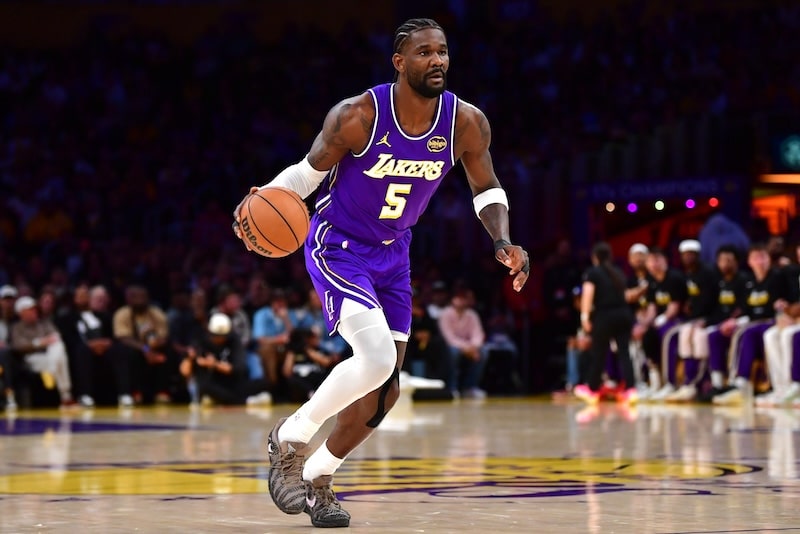
Deandre Ayton’s first season with the Los Angeles Lakers was filled with ups and downs, giving him an interesting decision to make this offseason. When Ayton was bought out by the Portland Trail Blazers last summer, he signed a two-year, $16.2 million contract with L.A. that included an $8.1 million player option for the 2026-27 […]
The head of the World Health Organization warned that Europe is the fastest-warming continent on earth and countries there need to do better to protect their citizens.
Communities around the U.S. are putting on epic fireworks shows for America's 250th birthday — but that spells trouble for dogs and cats. Here's a guide to help the animals in your life.
Leading up to the 2026 NBA Draft, there was a lot of speculation regarding what the Los Angeles Lakers would do with the 25th pick. Ultimately, L.A. decided on trading up to No. 24 with the New York Knicks to select Baylor guard Cameron Carr. Carr was mocked to go before Los Angeles’ selection but […]