Speaker Mike Johnson (R-La.) emerged from a White House meeting Thursday with two much-needed wins:
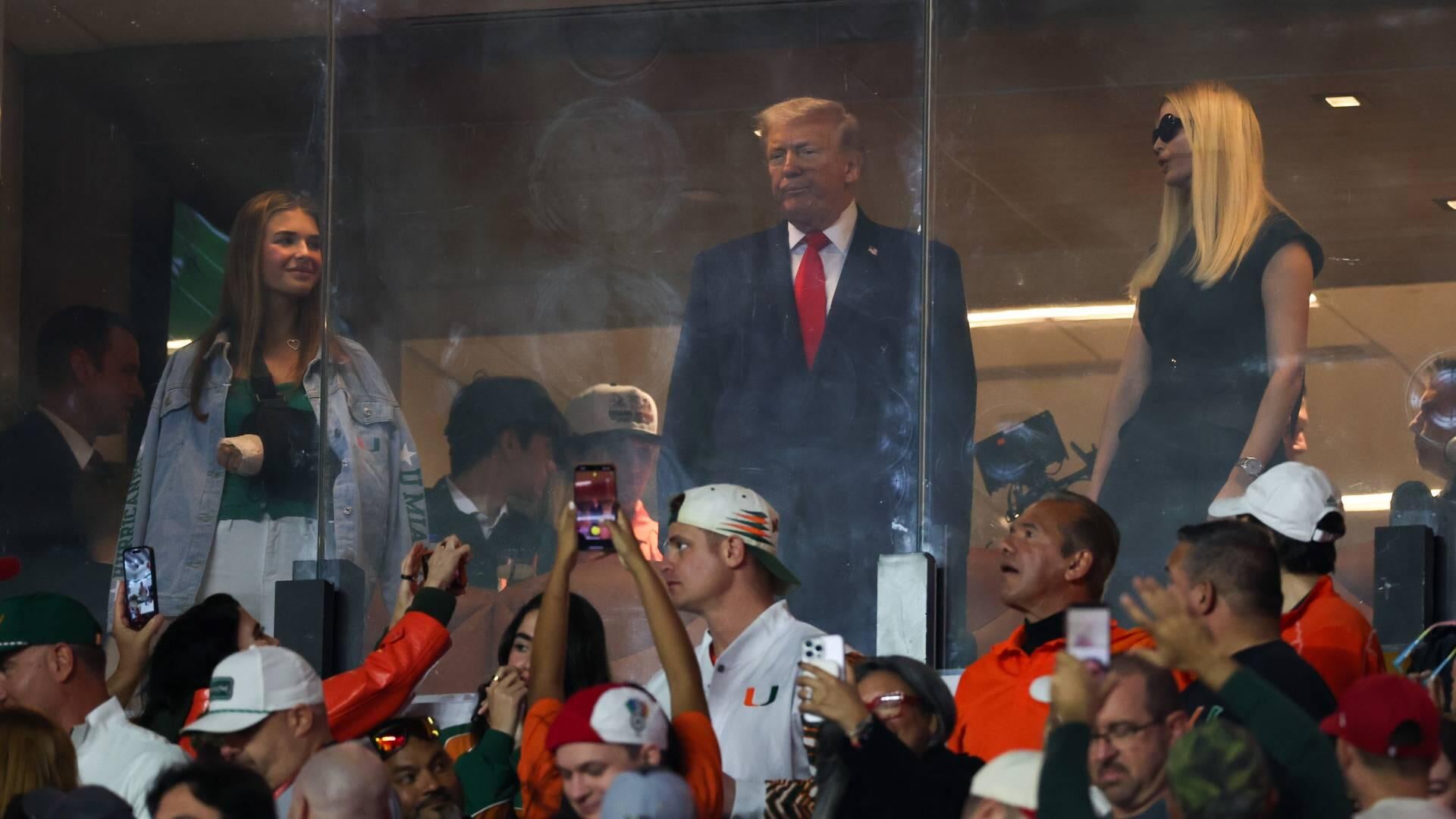
President Trump publicly urged House Republicans to stop tanking procedural votes, which could help unstick the House floor.
Johnson officially transmitted the bipartisan housing bill to the White House, a sign of confidence that it's on track to become law after Trump had refused to sign it just a day earlier.
Why it matters: The SAVE America Act has consumed the House GOP, with some Republicans frustrated that a bill they've already passed three times is now paralyzing their agenda.
Johnson was forced to scrap votes and end the House's workweek early after conservatives made clear they would tank rule votes on the floor over the Senate's failure to act on SAVE.
Driving the news: "I think it's a shame that it got canceled yesterday," Rep. Brian Fitzpatrick (R-Pa.) told Axios of the housing bill signing ceremony.
"I totally disagree with the tactic. These are his New York real estate leverage tactics he's trying to apply to the government, and I don't agree with it," Fitzpatrick added.
"He should sign it. ... This is a win, and the House already voted on this SAVE Act three times," Rep. Don Bacon (R-Neb.) told Axios, adding that Republicans should work with Democrats on a bipartisan version of SAVE.
Zoom in: The repeated shutdowns of House floor action are wearing on members across the conference.
"The SAVE America Act? It's over there," Rep. Carlos Giminez (R-Fla.) told Axios, gesturing towards the Senate. "We did our thing, all right. So what you're gonna.. you think you're going to force over here them to do something different? That's insane, and I don't play insane."
"What I don't like about holding the rule hostage ... is that it denies me, and the 750,000 people I represent, a vote," House GOP Conference Chair Lisa McClain (R-Mich.) told Axios.
"With them being obstructionist like they are, that's unfortunate, because we can't get our work done," Rep. Buddy Carter (R-Ga.) told Axios.
Yes, but: Rep. Anna Paulina Luna (R-Fla.) told reporters Thursday she isn't promising to support next week's rule if leadership blocks her effort to attach SAVE to the annual defense bill.
After the Supreme Court struck down Hawai'i's gun law Thursday, lawmakers and gun-control advocates are reassessing which firearm restrictions they can enact that this court will let stand.
Why it matters: The ruling shows how hard it has become to design modern gun laws under the court's exacting standard, which asks whether any new restrictions fit within the nation's historical tradition of firearm regulation.
Hawaiʻi crafted its law specifically to survive that test — and still lost, 6-3.
Driving the news: The court's ruling in Wolford v. Lopez determined that the state can't force private businesses open to the public to be gun-free zones.
The justices effectively shifted the burden of keeping guns out of private businesses from state legislatures to business owners themselves.
Yes, but: States can still set a default ban on private property that is not open to the public — such as office buildings and private homes, Jacob Charles, a law professor at Pepperdine University, tells Axios.
"Under the terms of the Wolford decision, it does not invalidate that part of Hawaiʻi's law," Charles says.
He suggested states could adopt "forced choice" laws requiring businesses to explicitly state whether guns are allowed inside and post corresponding signs at their entrances.
Zoom in: Hawaiʻi's case relied on a law enacted during the post-Civil War era, and the court rejected that.
However, the court's 2022 decision in New York State Rifle & Pistol Association v. Bruen left the door open for objective safety requirements, helping lead to the workarounds some states are now implementing.
Some are pivoting to stricter licensing rules and targeted hardware bans.
Californians seeking concealed carry permits must complete a 16-hour training course from an authorized instructor. A separate bill would require prospective gun buyers to complete a four-hour training course, adding at least $400 in fees.
And a federal appeals court upheld Illinois' ban on assault-style weapons and high-capacity magazines in 2023, recognizing that these have historically been used by the military and, therefore, are not protected by the Second Amendment for civilian self-defense.
Zoom out: Courts have regularly upheld gun restrictions on "sensitive" places where firearms are generally not expected, including schools, government buildings and public parks, Hayley Lawrence of the Duke Center for Firearms Law tells Axios.
Some states are even expanding what counts as a sensitive place. In Maryland, a judge ruled in January that a law classifying state parks, casinos, museums, health care facilities, stadiums, racetracks, and amusement parks as sensitive places could stand.
Courts have also generally upheld laws banning firearms in bars and restaurants that serve alcohol. Although the Bruen decision was struck down,the state was still allowed to prohibit guns in those establishments, in part because there's a heightened worry of violence when alcohol is involved.
Individuals who've been deemed dangerous, such as someone previously committed to a mental institution or a convicted felon, may be prohibited from acquiring firearms, a principle SCOTUS itself upheld in 2024.
The bottom line: "We didn't have like big population centers in the way that we think of them today, we didn't have people living in very crowded spaces, gun carrying and gun culture to a large extent looked very different, as did the technology," Lawrence says.
"That's one of the big problems with history and tradition as a constitutional methodology ... it really inhibits legislative experimentation or creative thinking or problem solving for today's legislatures dealing with today's problems."
The Trump administration has asked OpenAI to limit the release of its next model, GPT-5.6, to only a small set of government-approved partners before any wider release, citing security concerns, according to a source familiar with the matter.
Why it matters:This marks the first time the U.S. government has preemptively asked an American AI company to restrict the launch of a model before release.
Driving the news: The White House's Office of the National Cyber Director and the Office of Science and Technology Policy asked OpenAI to limit the rollout of GPT-5.6 as the administration builds a framework for testing and evaluating the security of new models, per the source.
The Information reported earlier Thursday that OpenAI CEO Sam Altman shared the plans for a limited rollout in a memo to employees.
"We've made clear to the U.S. government that this is not our preferred long term model, and will work with them and others in industry to achieve a more sustainable approach for future releases," Altman said in the memo, according to The Information.
Between the lines: The source told Axios that OpenAI has been proactively working with the administration on the model release since before Anthropic revoked access to its frontier models, Fable 5 and Mythos 5, over a rare Commerce Department directive.
The White House has been looped in on the capabilities of OpenAI's new model and has been able to preview its abilities.
Flashback: President Trump signed an AI security executive order earlier this month that directs several agencies to stand up a voluntary testing protocol for AI companies prior to releasing a new model.
Political infighting over how restrictive and mandatory that program should be delayed the executive order for weeks.
The big picture: AI labs are caught in a tough position as they race to release new models to compete not only with one another, but with increasingly capable Chinese open-source models.
Meanwhile, security officials and corporate leaders are growing increasingly concerned about what happens when bad actors — including nation-state spies, cybercriminals and rogue insiders — get their hands on these highly capable models.
What to watch: Altman said in the memo that he hopes to be able to release GPT-5.6 a "couple of weeks later," per The Information.