My dear children, I write this to you so that you will not sin. But if anybody does sin, we have an advocate with the Father—Jesus Christ, the Righteous One.1 John 2:1
Washington's offensive line drew sharp criticism after walking toward the sideline while the star QB was down, but an 11-second video doesn't tell the whole story
A 22-time Grammy-winning rock group will release its first album of original songs in nine years, featuring a closing duet with Dolly Parton that contains her final recorded vocal performance.
With both programs investing over $40 million into their rosters, an 0-2 start in SEC play would virtually extinguish College Football Playoff hopes before October arrives
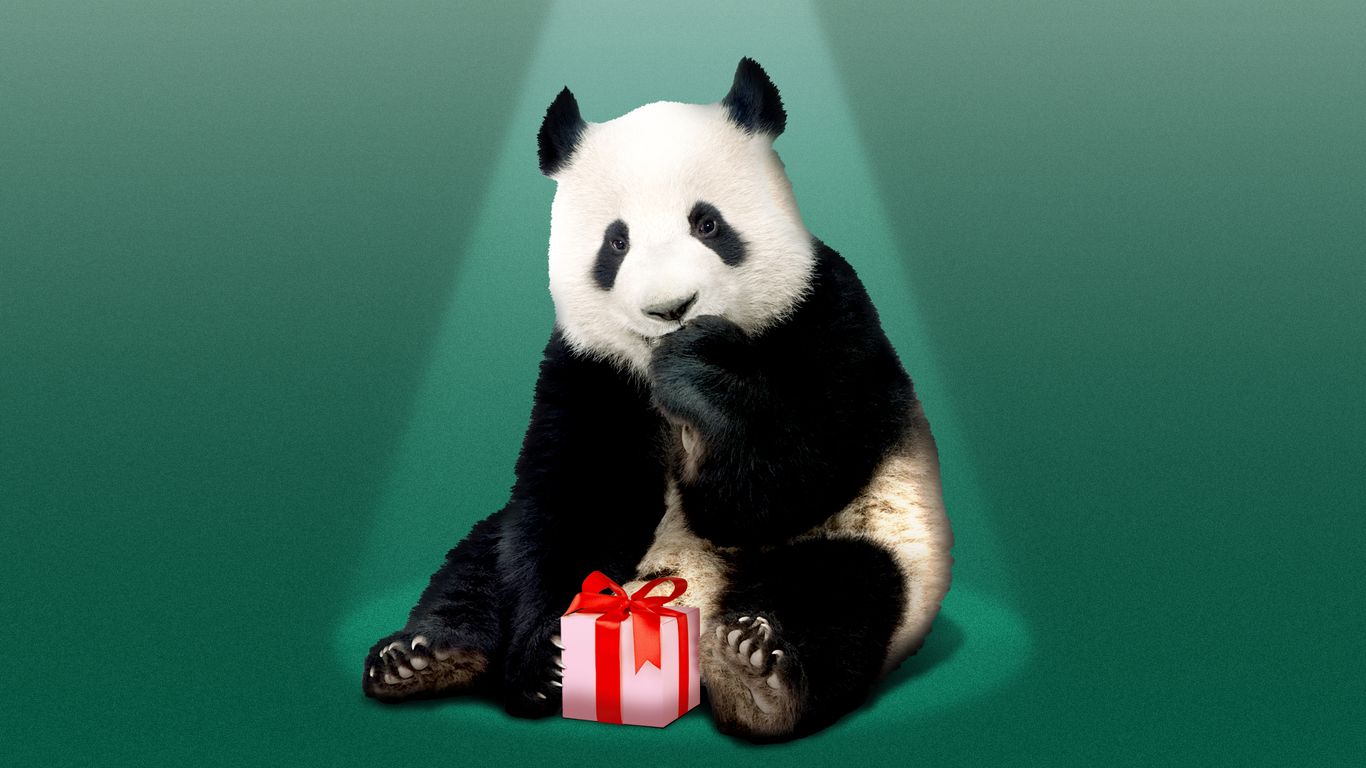
Chinese President Xi Jinping said Thursday during a visit with President Trump that China will send two pandas to Zoo Atlanta, calling them an "envoy of friendship."
Why it matters: The fuzzy ambassadors have long been one of China's most beloved tools of soft power and could signal an attempt to cool tensions in U.S.–China relations.
Driving the news: Xi made the remarks Thursday during his three-day visit to D.C., where he and Trump are expected to discuss AI, economic ties and critical minerals before a state dinner.
Trump hailed their "truly great friendship" and greeted Xi on the tarmac at Joint Base Andrews earlier Thursday, a rare move not usually offered to heads of state visiting the U.S.
Zoom in: China typically loans pandas abroad for set terms as a sign of goodwill, and these pandas would be the first at Zoo Atlanta since its previous pandas returned to China in 2024.
Zoo Atlanta confirmed to Axios on Thursday that the pandas Xi mentioned are the same ones the zoo and the China Wildlife Conservation Association announced in April.
Male Ping Ping and female Fu Shuang are both from China's Chengdu Research Base of Giant Panda Breeding.
Zoom out: China has also used its pandas as a cudgel when foreign relationships turn frosty.
Pandas living at the National Zoo in D.C. returned to China in 2023 when their agreement expired, as Washington and Beijing butted heads over security, economic and humanitarian issues. Two new pandas returned a year later under a new agreement.
Wild giant pandas are native to China, meaning other nations wishing to observe them typically must receive them from Beijing.
Flashback: The National Zoo's first pandas arrived during President Nixon and First Lady Pat Nixon made a historic trip to China in 1972 that opened a new chapter in U.S.–China relations.
At a dinner in Beijing, Pat told Chinese officials she had fallen in love with the furballs, and Chinese Premier Zhou Enlai replied, "I'll give you some."
Two months later, they arrived, and Pat predicted there would be "panda-monium" at the zoo — and she was right. Ling-Ling and Hsing-Hsing were the zoo's top attractions until they died in the 1990s.
The "third-party[.]com" domain, commonly used as a documentation placeholder, has been observed serving a ClickFix lure to Windows browsers while displaying a harmless decoy to other users.
"third-party[.]com has been a generic documentation placeholder for years, the same role example.com plays," Manifold Security's Head of Research, Ax Sharma, said. "Unlike 'example[.]com,' third-party[.]com
A Guatemalan immigrant who died after fleeing an attempted arrest was driving a car registered to the suspect who was sought by agents, officials said.
Student loan holders sued the Education Department on Thursday, claiming they suffered financial damages despite getting their debts forgiven years ago.
About half of Japanese firms have an “old guy who does nothing.” Colleagues say they take many breaks, idly chat, browse the web, and stare off into space.
Thirty years after its difficult release, this platinum-certified 1990s record has grown from a critical disappointment into a major influence on emo and alternative rock.
Mississippi Valley State basketball will play 14 straight nonconference away games to start the 2026-27 season and will earn close to $1 million total to give high-major outfits a tune-up
On Thursday, the two leaders will hold meetings where Trump and Xi are expected to talk about artificial intelligence, rare earths, trade and geopolitics such as Iran and Taiwan.