For we know him who said, “It is mine to avenge; I will repay,” and again, “The Lord will judge his people.” It is a dreadful thing to fall into the hands of the living God.Hebrews 10:30-31
Netflix drops all 10 episodes of A Different World on Sept. 24, with Whitley and Dwayne's daughter arriving as a freshman and Debbie Allen directing the premiere.
Netflix’s ‘A Different World’ forges its own path while honoring the legacy of the original series, silencing those who had reservations in the process.
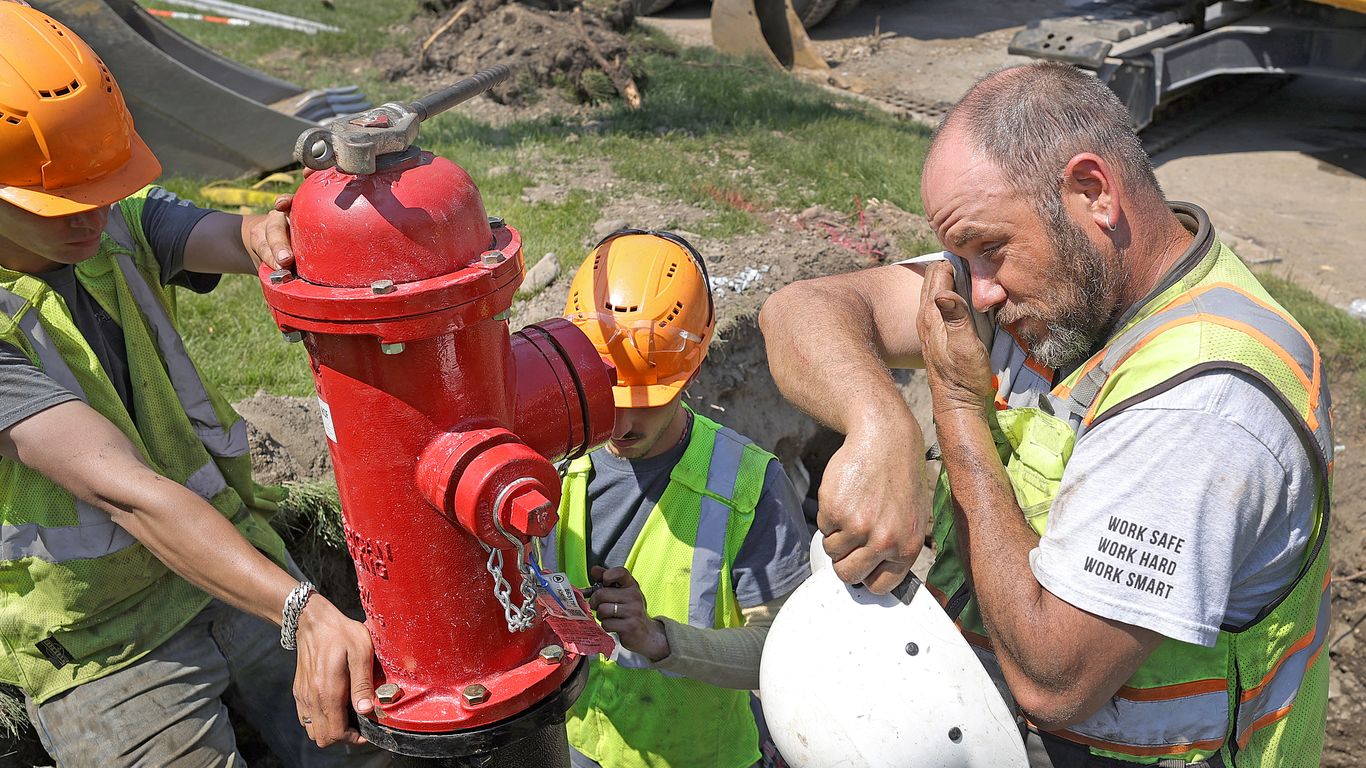
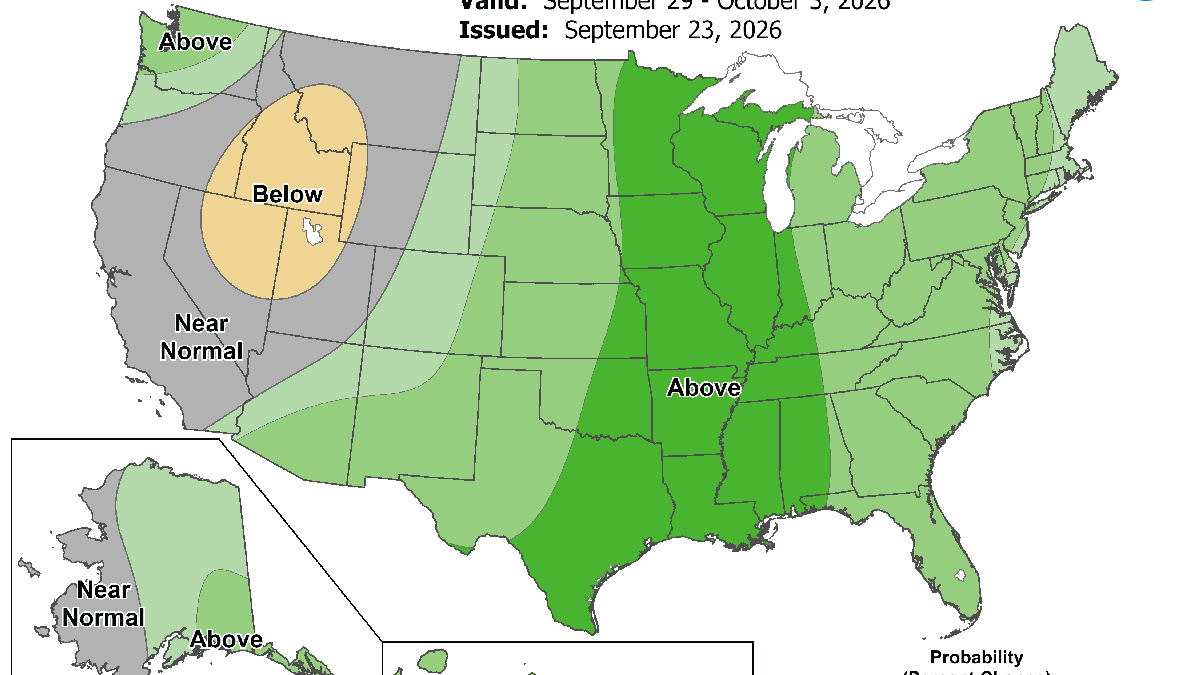
As extreme heat makes afternoons more dangerous, schools, sports teams and outdoor employers are shifting when — and sometimes whether — people can safely be outside.
Why it matters: Adapting to hotter conditions could reshape the American workday while putting a premium on the cooling and energy infrastructure people rely on when outdoor conditions become unsafe.
State of play: The federal Occupational Safety and Health Administration recommends that employers facing dangerous heat consider moving work to early morning or late afternoon, shortening shifts, rotating workers and reducing strenuous work during the hottest parts of the day.
California's new Extreme Heat Action Plan links protecting heat-vulnerable groups, including workers, with expanding access to indoor cooling and strengthening energy systems to reduce grid strain and outages.
Oregon's statewide heat-illness prevention rule kicks in when the heat index reaches 80°F, requiring water, shade and acclimatization, with additional measures such as preventive cooldown rest breaks at 90°F, Oregon OSHA told Axios.
By the numbers: Oregon OSHA conducted 3,104 inspections addressing heat and issued 408 citations totaling $652,640 in initial penalties from 2022 to 2025, according to data shared with Axios.
Case in point: Texas offers a glimpse of the practical tradeoffs that come with reorganizing daily life around heat.
Under new statewide rules, schools are moving sports practices to very early or late hours when conditions become dangerous. "Many of our schools have directly adapted their practice times," University Interscholastic League (UIL) athletic director Ray Zepeda told Axios.
Moving practices away from peak heat reduces coaches' exposure, Zepeda said, but stretches the workday for coaches and athletic staff who are full-time school employees. "It is increasing their workday," Zepeda said.
Reality check: Shifting schedules isn't always enough. Cooling is becoming more important for heat safety at the same time extreme heat can stress the electricity system powering it.
"Heat can also stress our electricity grid," California Natural Resources science adviser Andrew Jones said during a recent discussion of the state's updated Extreme Heat Action Plan.
A grid failure during a heat event is especially concerning because people rely on electricity for air conditioning and safe indoor spaces, he said.
Between the lines: During strenuous outdoor work, workers' own metabolism can become a major source of body heat, Jennifer Vanos, an associate professor at Arizona State University who studies extreme heat and human health, told Axios. Research published this year found rest and self-pacing can help workers manage heat stress.
Reducing work intensity or spending less time working can lower heat load, but both can mean less work gets done in that period. "No matter what, somebody is going to pay the price," Vanos said.
Vanos points to research suggesting adequate rest and cooling can help workers remain productive while staying safer in hot conditions.
The big picture: Changes to working hours are already part of adapting to extreme heat in places like Phoenix, where Vanos said it's "pretty dead" outside during the day.
"Part of the shift to being able to live and play and work in these hotter conditions will be having to have certain schedule changes so that everybody can be safer," Vanos said.
Overnight heat can also limit how far schedules can shift. Climate change and the urban heat-island effect can keep nighttime temperatures elevated, and in Phoenix "we're reaching some of those limits overnight" for hard physical work, Vanos said.
The bottom line: Shifting the clock can buy people relief from extreme heat — but as the number of dangerously hot hours grows, there may be fewer safe hours to shift into.
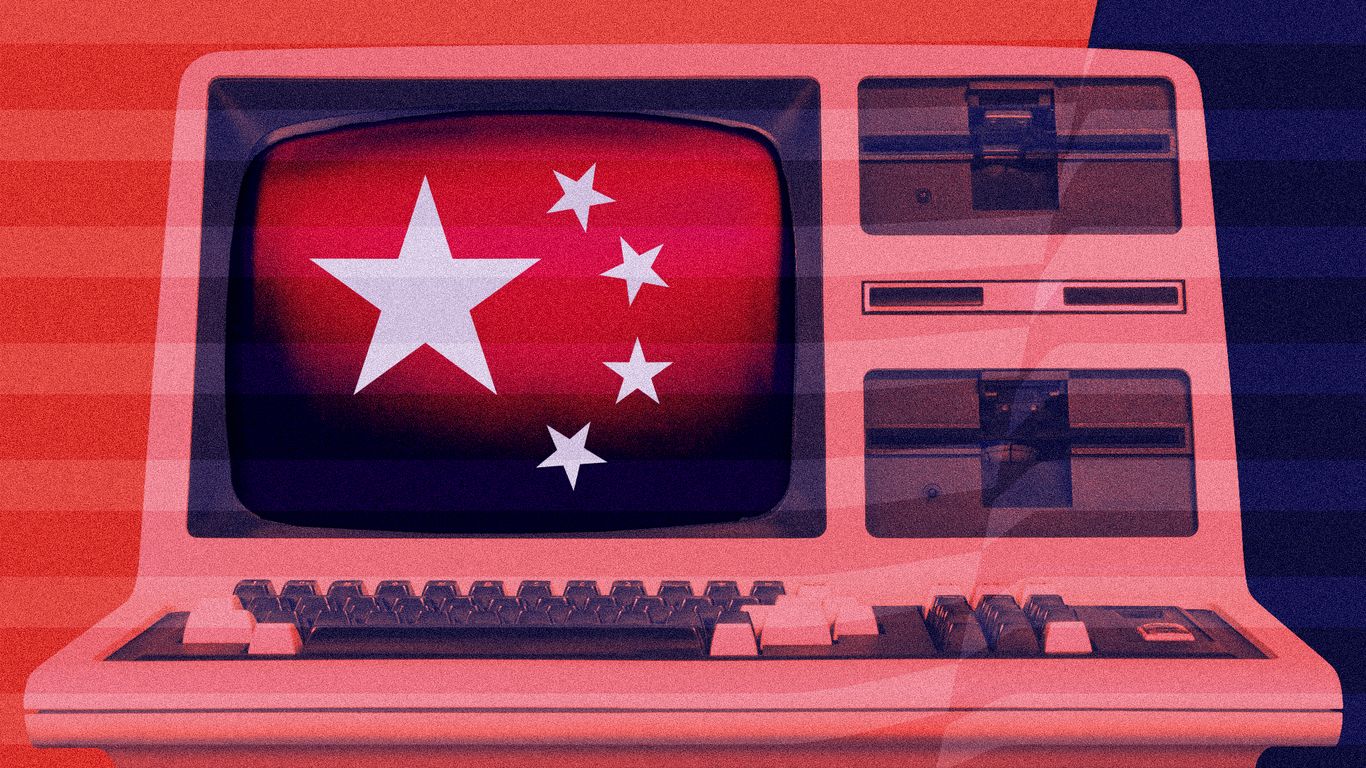
China is waging a much different war for AI supremacy than the U.S.
Why it matters:China is obsessed with state control and adoption. Chinese officials are laser-focused on deep, widespread AI domestic use they can monitor and steer at every level of their economy.
By contrast, America is obsessed with developing superior AI faster. Period. The U.S. thinking: The nation first to true super-intelligence wins everything.
China and the U.S. agree on three AI certainties: The country with the most powerful AI holds power, sets global standards, and wins the coming decades economically and militarily.
From there, the two nations are on different roads. China's 15th Five-Year Plan, released in March, captures their strategy well.
AI appears 52 times, 5x more than a half-decade earlier. Computing power gets its own full chapter.
Their goal is clear: Integrate AI across 90% of the economy by 2030. America has nothing like this.
The bottom line: China doesn't get spooled up about white-collar job loss or humanity-ending rogue AI. The regime is worried most about AI turning against ... the regime.
Chen Yixin, China's spy chief, warned this month — in public — about AI's ability to launch public opinion wars and "cognitive warfare against China," threatening "political security, institutional security and ideological security."
China's weaknesses
China's AI strategy targets some substantial domestic problems they purposely omit in their AI sales pitch.
Why it matters: Americans tend to focus on China's growing strength — but much of its AI thinking flows from glaring weakness.
😱 They're staring down:
An aging population: China's population has shrunk for four years straight — and is very old. They have nearly as many people over 60 as America has in total. This helps explain their robotics obsession.
Very high youth unemployment: China's currently sits at 19%, basically double that of the U.S. — and an angry, young population with powerful AI tools is a threat to power.
Inferior chip production: Nvidia is simply way better than anything they've got. You can't compete on AI with uncompetitive chips — and Huawei, their Nvidia, is way behind despite state-directed help.
Export addiction: China is crushing it on exports, often flooding foreign markets with cheap cars, parts and technology. But its domestic economy is sucking wind — strong supply, weak demand.
China's strengths
China is America's only real AI competition — and, despite its weaknesses, it has some serious, structural advantages.
Why it matters: China leads in the physical ingredients for scaling AI: power, materials, robots and cheap models people actually use. These are the key ingredients for turning super-human intelligence into real economic and military power.
Think of it this way: If they catch up — or lap us — on AI capabilities and chip production, they're way better positioned to instantly impose and roll it out across society.
🦾 Their edge exists thanks to:
Power: Electricity is the biggest bottleneck on America's AI buildout, and China is swimming in it. BloombergNEF estimates China will add almost six times as much generating capacity as the U.S. over the next five years.
Vital materials: China dominates the minerals AI hardware runs on. The IEA tracks 20 essential ones for building AI and adjacent tech — and China dominates all but one, usually by huge margins. They have applied export controls to half of them as a way to slow us down.
Rolling out robots: This is where AI truly meets the real work. More than half of all industrial robots installed worldwide in 2024 went to China. They dominate us on this one. Better AI will equal better robots.
Cheap, widespread adoption: Chinese open-source models are the world's default for developers building cheaply. Five of the six most popular models on OpenRouter, a leading AI marketplace, come from Chinese firms.
Land-and-sky autonomy: They're simply crushing us on self-driving cars and self-flying drones. China's DJI alone has over 70% of the global drone market.
Understanding China's AI
China builds the world's best cheap open-source AI but trails America's most cutting-edge AI by about half a year, on a fraction of the investment.
That's the consensus of most AI experts we talk to. Truthfully, there's no rock-solid way to measure it, and every model release resets the estimates.
Why it matters: Everyone agrees on this: Chinese models are very good, gaining fast and are much cheaper to use.
The four you need to know:
Kimi K3 (Moonshot):Widely rated as the best all-around open Chinese model. It's strongest on long, multi-step agentic tasks.
Qwen3.8-Max (Alibaba): Also highly regarded and even tops some model rankings.
GLM-5.3 (Zhipu / Z.ai): China's coding specialist. Its predecessor scored within a point of Anthropic's Claude Opus 4.8 on a key coding test, at under a fifth of the cost.
DeepSeek V4 / V4.1-Flash: Among the cheapest to use. It's MIT-licensed and truly open.
The twist: U.S. officials and AI companies accuse Chinese labs of "distillation," covertly firing millions of questions at American models and training on the answers.
Washington has threatened sanctions and blacklisting, but hasn't pulled the trigger.
Worth noting: U.S. frontier labs have lately focused far more on building powerful lower-cost models to try to make sure Chinese AI can't undercut them on price.
Using it vs. fearing it
China is not big on dissent — or public opposition and hand-wringing about the regime's priorities.
That helps explain why the Chinese public is far more bullish on AI than America's.
Why it matters: They use it, like it and trust it — by wide margins.
80% of Chinese people use AI weekly vs. 54% of Americans. It's in schools, public services and robots in hotels and stores.
84% of Chinese people say AI excites them. That's the highest of any country. Only 38% of Americans say the same.
87% of Chinese people trust AI, compared to just 32% of Americans. And 54% want more of it in daily life. That share is a measly 17% here.
Worth noting: Don't over-read it. ChinaTalk, a sharp China tracker, argues the optimism is overstated and masks rising worry about AI wiping out jobs.
📈 If you're a CEO or on a CEO's team: Ask to join Jim's new weekly Axios C-Suite newsletter.
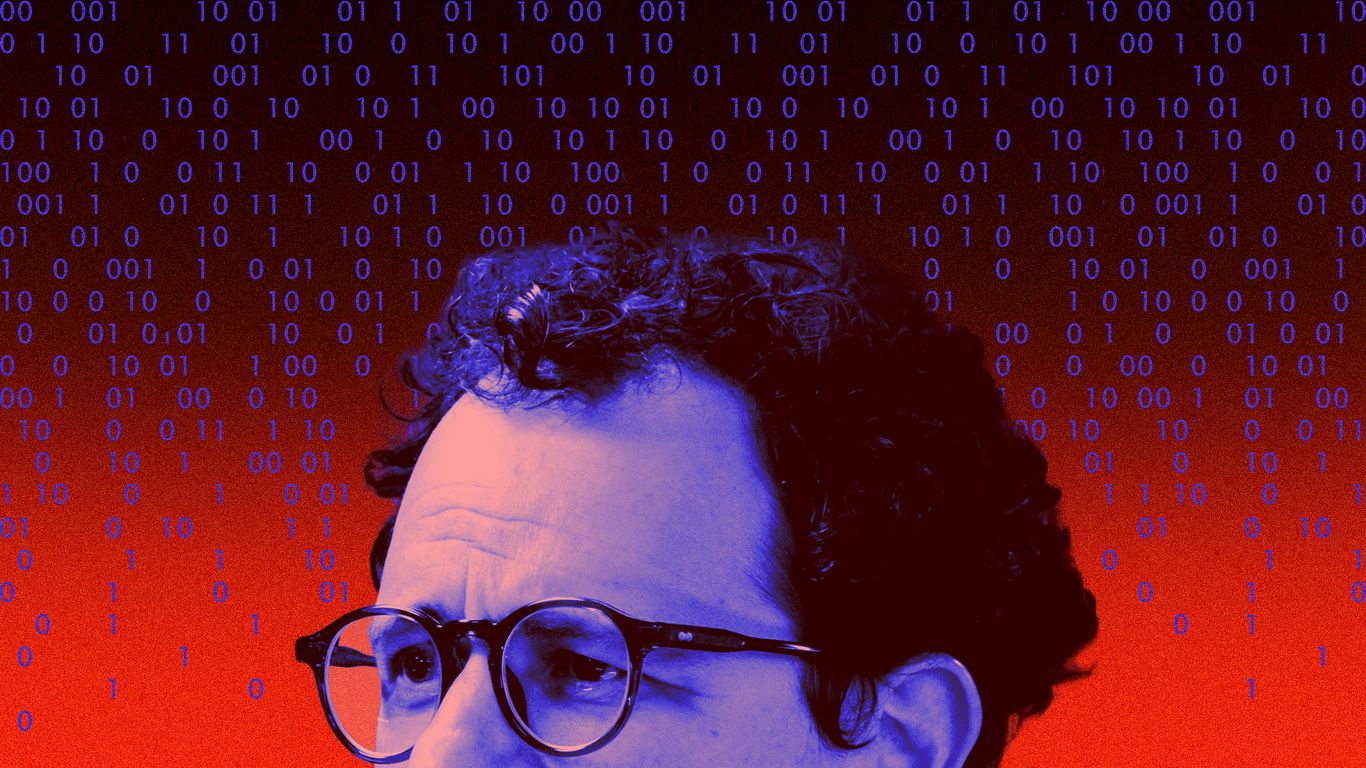
President Trump's allies are targeting Anthropic CEO Dario Amodei as the face of AI "doomerism" and a founding father of the effective altruism movement that's come under increasing political fire.
Why it matters: The attacks signal that Anthropic could remain a Trump target as his allies push back on Amodei's AI safety warnings amid the midterm elections. Trump surrogates see Amodei as an easy foil because of his politics and focus on AI safety, sources told Axios.
For investors, it's a worrisome proposition as the company prepares for what's expected to be a record-setting IPO.
Behind the scenes: A memo began circulating within the White House this week that seeks to paint effective altruism as a fringe, cultish collective out of touch with mainstream America. The memo, obtained by Axios, places Amodei at the foundation of the movement, which defines itself as an effort to maximize the benefits of philanthropy.
Effective altruism "built the AI-doom pipeline," states the memo, which was penned by a Trump political adviser who doesn't work for the White House.
Critics of the movement, which has ties to the AI research community, have called out its obsession with AI safety, animal welfare (including musings on shrimp consciousness) and other values they deem far from the U.S. mainstream.
The memo says it prioritizes "foreigners over citizens, shrimp over families, future hypothetical people over the living, and - on the current agenda - possible machine minds over Americans."
It names Amodei as one of the people who "built the [EA] network" as well as his sister and Anthropic President Daniela Amodei, whose husband once led a philanthropy dedicated to AI safety.
The document casts those ties as "The Anthropic knot."
Amodei "is the embodiment of an ideology and globalist approach to innovation that's counter to the president's America First agenda," one source close to the administration told Axios.
The other side: Anthropic has been working to distance itself from effective altruism.
In a 2025 Wired story, Daniela Amodei said: "I don't identify with that terminology." Early employee Amanda Askell, a philosopher by training who helps develop Claude's constitution, says it's "not a theme of the organization."
Between the lines: Drafted with Trump in mind, the memo underscores the profound philosophical and political differences between MAGA and Silicon Valley elites, a divide that has made Anthropic's relationship with the White House rocky.
In the view of the Florida-heavy White House and its allies, Anthropic is staffed with too many Biden-era liberals, Democrats and strange Californians.
Months ago, when some on Anthropic's team inquired about Amodei meeting with the president, White House officials advised against it because "Dario's a little too weird" for Trump, one senior official told Axios.
The document lists a veritable parade of horribles for the average conservative mind: abortion, veganism, devaluing human life by overvaluing animals or granting "digital minds" civil rights-like protections.
It does not directly tie these concepts to Amodei.
Nor does the memo link these issues to EA's most notorious grifter, Sam Bankman-Fried, but it makes sure to mention him.
Yes, but: It's not just MAGA. Silicon Valley players and Democrats also criticize the EA movement.
"What they believe is crazy. And it's dangerous. What they say about AI safety is also bullshit," one Democratic donor and tech entrepreneur invested in an AI company said.
Catch up quick:The EA movement includes many participants and players, and AI safety concerns are one of many areas of focus. Peter Singer, a philosopher who's been closely affiliated with its tenets, has long called for the vast sums spent in philanthropy to be put to better use. He is also one of the most prominent animal rights advocates.
The big picture: Amodei's AI safety warnings have drawn criticism from Trump allies and fellow tech executives.
CEOs including Nvidia's Jensen Huang and Microsoft's Satya Nadella are trying to build a more positive message about the benefits of AI, hoping to win over ordinary people in the face of a growing populist backlash against the technology.
OpenAI CEO Sam Altman, Google DeepMind Chair Demis Hassabis and Elon Musk have also called for slowing down AI development after a spate of worrying episodes in which AI agents hacked outside companies.
But Amodei is considered the chief spokesperson for AI safety in Trump world, following major fallouts with the administration this year.
Reality check: Some in the administration have previously put aside gripes with Anthropic, mainly due to its role leading the AI frontier and personnel changes.
OpenAI catching up technologically could make it easier for Trump acolytes to go after the embattled company again.
The bottom line: The philosophy is now at the heart of the cultural clash between the Trump administration and Anthropic.
Dr. Heidi Overton has called mifepristone “dangerous to women.” As a White House aide, she worked to reduce the number of vaccines recommended for children.












.jpg)

