For we know him who said, “It is mine to avenge; I will repay,” and again, “The Lord will judge his people.” It is a dreadful thing to fall into the hands of the living God.Hebrews 10:30-31
Jamey Eisenberg cautions Fantasy managers not to overreact after the first two weeks, but highlights several players with new opportunities to produce big due to a rash of injuries
Democrats hope that Mary Peltola can flip a Republican Senate seat in Alaska. Former aides describe a campaign and congressional office marked by chaos.
Timothy Mellon, one of the party’s biggest donors in 2024, has so far withheld his midterm donations for Republican senators because he is unhappy about the failure to pass a key Trump priority.
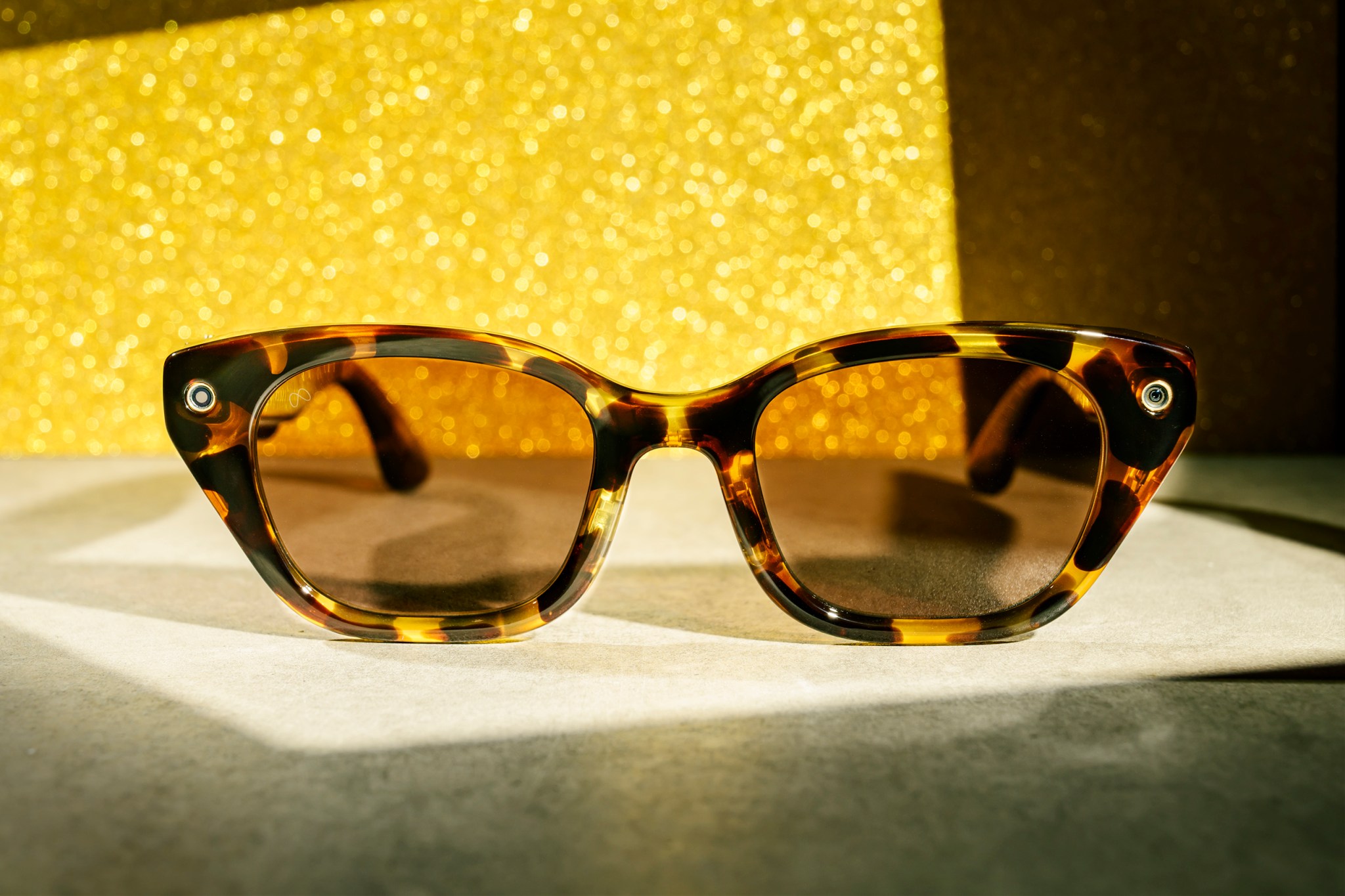
Meta's new virtual reality glasses take a big step toward being something an average person might be willing to wear, ditching much of the bulk as well as the need for handheld controllers.
Why it matters: Unlike Meta's Ray-Bans, its VR devices have struggled to break out of their gamer niche and into the mainstream.
Yes, but: In order to slim down the size, the new Meta VR glasses require a wired "puck" that can be held or clipped onto a belt. It contains much of the device's computing horsepower, including its processor, battery and storage.
Zoom in: I spent about half an hour on Tuesday getting to use a prototype of the new specs, which are controlled through a combination of eye-tracking, hand gestures and voice commands.
Magnetic prescription inserts attach easily, similar to the approach Apple took with Vision Pro.
Zoom out: The glasses are designed to serve a range of purposes from watching a movie or immersive concert to playing games and getting work done.
I played a re-imagined version of Beat Saber that cleverly re-maps the music game for control via hand motions.
I watched a clip from last year's NBA finals.
I used a trio of virtual monitors to do some "vibe coding" on a website, with one display showing the Muse terminal and another previewing the site itself.
Meta sees these VR glasses as a "general device," Meta VP of product Angela Chang told Axios. "It's not built for any specific use case per se."
My thought bubble: It's the most practical combination I've seen of an Apple Vision Pro-class device in a headset I'd be willing to wear outside of the house.
The big picture: Google is working on a similar device, known as Project Aura, set to debut later this year and built in partnership with Xreal.
Meta touts its wider field of view and higher optical quality, among other advantages over Aura.
Between the lines: As for why it won't arrive until next spring, Meta executives say they want to be sure it makes a good first impression, especially inside a VR ecosystem.
"We really are trying to strive for a very high bar on the software quality and experience side," Chang said.
Bottom line: Meta said it has modest expectations for unit sales, but says success will look like attracting folks beyond gamers, Chang said. "Are we bringing in new people into VR who, you know, maybe in the past would have looked at the Quest and said, 'Nah, that's not for me?'"
Meta on Wednesday added a host of features to its viral Muse assistant and announced plans to install the agent in new iterations of its products, from a handheld AI device to high-tech glasses.
Why it matters: Meta has poured billions of dollars into both its AI and VR efforts. It's counting on convergence as a key part of making that bet pay off.
Driving the news: New Muse capabilities include live video chat, real-time voice conversations with custom voice options and an e-mail address for each person's agent.
Meta announced new retail partners, including Walmart, Best Buy, Gap, Sephora, Wayfair and more, a growing list that makes Amazon's decision not to allow Muse stand out. Muse has prompted a stock selloff in recent days as investors fear an end to stickiness between brands and customers.
Meta said Muse is coming soon to its AI glasses, though it declined to be more specific than "in the coming months."
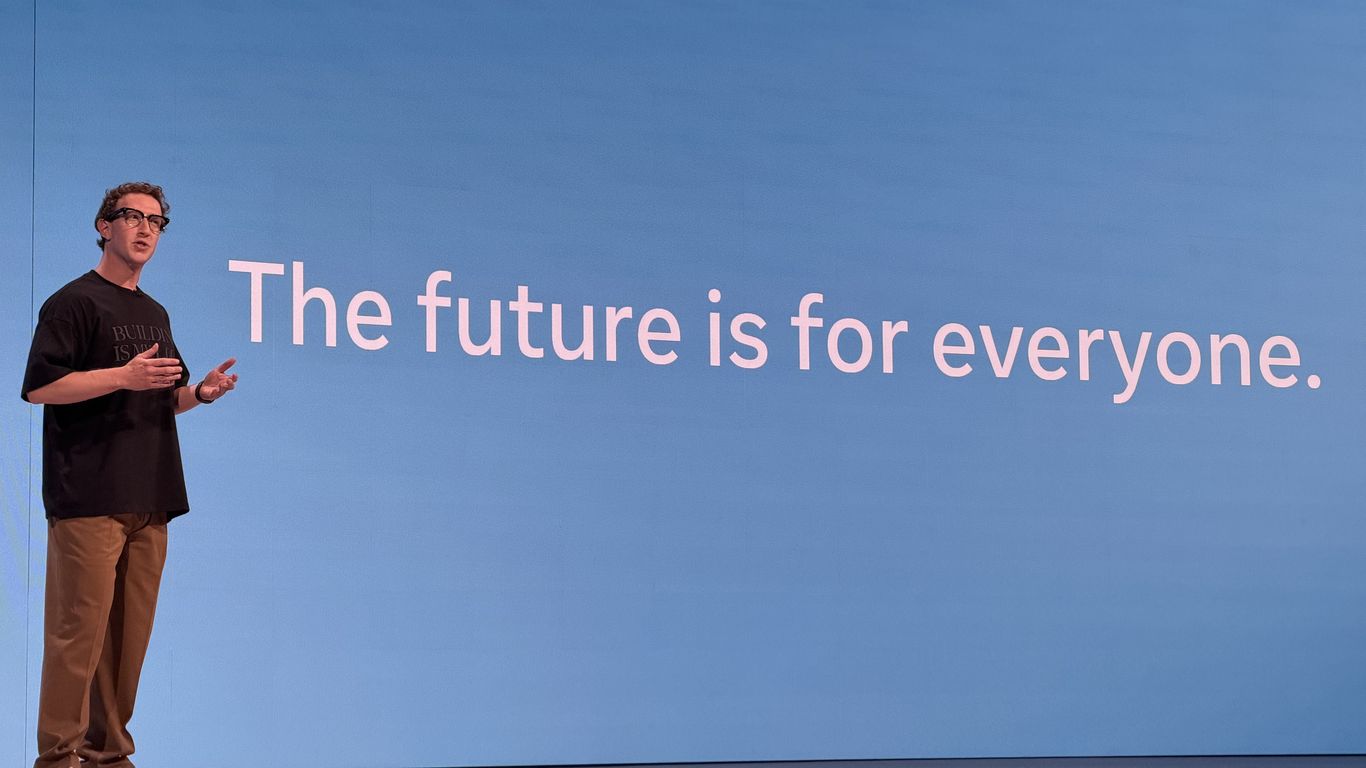
"I expect that Muse is going to grow into the personal superintelligence that billions of people around the world are going to use to accomplish their goals and improve their lives," CEO Mark Zuckerberg said during his Meta Connect keynote on Wednesday.
Zuckerberg said that Meta's business model behind Muse is a novel one. "We believe that Muse will make you money, and we're standing behind this by making Muse free for a huge number of tokens, with the expectation that over time we will profit by taking a small fee from transactions," he said.
Beyond Muse, Meta used the event to debut a range of new hardware along with new privacy options that could make the gear more palatable to the mainstream.
Executives teased a handheld AI device but offered little detail. An array of new AI devices is set to hit the market soon, including from OpenAI.
Meta's first audio-only glasses aim to appeal to those who want the benefit of open-air sound and an always available AI assistant without the cost and potential creepiness that comes from the camera-equipped version. The new models, which will be available later in October, start at $349.
Meta is also updating its Meta Ray-Ban and Meta Glasses lines with modest improvements and new designs.
Meta previewed a much slimmer, $1,299 headset due out next spring. The Meta VR glasses shift the computing, battery and storage to a separate, wired puck, allowing for a 5K display in glasses that weigh just 100 grams.
The headset relies entirely on voice, hand gestures and eye gaze to control a range of apps across games, entertainment and productivity.
Meta says more than 75 hand-tracked games will be available at launch. Older titles created for Quest will also work, but people will then have to strap on controllers.
The big picture: Meta has invested heavily in glasses and AI over the last several years. Now it sees those giant bets converging.
"It just feels really clear that [AI]'s what's going to enable the next big platform," said Alex Himmel, Meta's vice president of wearables. "You're really starting to see that vision of VR and AR converging into glasses, starting to happen sooner."
Between the lines: Meta is continuing a big shift on the privacy front.
The company had already said it is working on a confidential virtual machine option for the Muse assistant.
On Wednesday, Meta added that it is also readying "Private Processing" for AI glasses, a system designed to keep data protected even while it is being processed in the cloud, similar to Apple's Private Cloud Compute.
Meta said the platform is working and hopes to bring it to glasses by the end of the year, though it has not committed to a launch date.
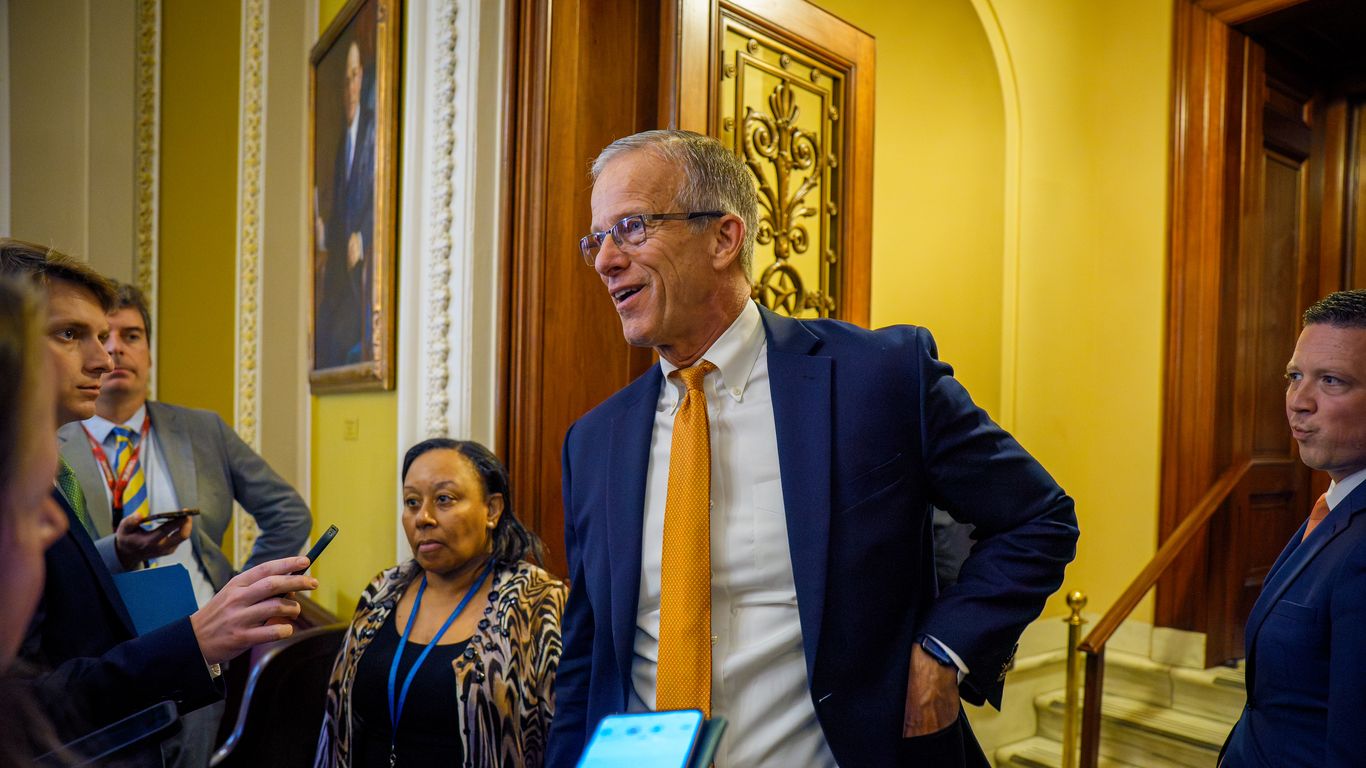
Senate Majority Leader John Thune plans to run for another term as GOP leader, even if Republicans lose the chamber's majority, he told Axios in an exclusive interview Wednesday in his Capitol office.
Why it matters: Thune (R-S.D.) is giving his senators broad leeway and tons of cash to preserve GOP control of the Senate.
"I do see the Senate as a firewall in a lot of ways," Thune told Axios.
"We will spend probably the next two years — if the House flips — trying to do impeachment or investigations, etc.," he said. Otherwise, the chamber will focus on judicial and executive nominations.
Zoom out: Thune has three ways to help in the "tough environment" for Republicans in 2026.
🪧 1.Run against Washington: Thune said he understands if GOP candidates need to rhetorically distance themselves from Congress or even fellow Republicans in D.C., including himself.
And when it comes to distancing from President Trump: "In some places the president's coming in, some places he isn't." Candidates can draw their own conclusions, Thune said.
Republican candidates are increasingly concluding that to win their races, they need to break with Trump on some issues.
🗳️ 2. Vote for your state: Thune's policy with senators is "don't surprise us and when you can, stay with the team," but "do what's in the best interest of you and your state."
That could lead to a rebuke of Trump when Democrats force another vote on an Iran war powers resolution, expected before the Senate breaks for October.
People's views have "evolved and changed" as the war has dragged on, he said. Many senators are "responding to what they're hearing back home."
"That's a really hard vote," Thune acknowledged. "Any time you are committing your country to putting young men and women in harm's way — those are the hardest votes you'll make."
He hopes Republicans will stick together to win the vote.
What to watch: Thune wants to give Republicans more votes before the break to champion back home.
He sees an opportunity with permitting reform legislation, which is being negotiated behind the scenes. Thune said it's possible he sets up a procedural vote on it after the final vote on the Protect College Sports bill.
Thune is also floating a vote on the House-passed legislation targeting data center energy costs if the Senate remains in town next week.
💰 3. Spend cash like crazy: The Thune-linked Senate Leadership Fund is set to spend nearly $280 million in video advertising this year — more than any other group, according to AdImpact.
Texas PAC, which is affiliated with SLF, is on track to spend another $112 million.
"Texas is expensive," Thune said, but "we're doing everything we can to help. We can't afford to lose Texas."
The bottom line: "That's ultimately up to the conference," Thune emphasized when asked if he'd run again if the GOP lost the majority, but "that's the plan."
"The elections are going to be really important — I think – in how we view what happens next."
Thune said you can't "rule anything in or out" when asked if he could face a challenger for the position.
"But I think we worked really hard to create an environment here that is conducive to individual senators being able to achieve their objectives," he said. "I think, in this job, you have to be a good listener."
Secretary of State Marco Rubio said that U.S. negotiators had restarted conversations about Iran’s nuclear program, but that there were no breakthroughs.
Days are officially getting shorter, and more darkness outside means a solid set of backyard lights is even more important. For reasons of utility and safety,